

Why the Musée d’Orsay Is One of Paris’ Most Beautiful Museums
Paris is a city filled with world-famous museums, elegant monuments, romantic streets, and unforgettable cultural experiences. Most visitors know about the Louvre Museum, the Eiffel Tower, Notre-Dame Cathedral, and the Arc de Triomphe. However, for many travelers, one of the most beautiful and emotional museum experiences in Paris is found inside the spectacular Musée d’Orsay.
The Musée d’Orsay is more than a museum. It is a journey into beauty, creativity, passion, and artistic revolution. Located on the Left Bank of the Seine River, inside a former railway station, this extraordinary museum is one of the most beloved cultural attractions in France. From the moment visitors step inside, they are surrounded by a unique combination of grand architecture, natural light, historic atmosphere, and some of the most famous artworks in the world.
The museum is especially known for its incredible collection of Impressionist and Post-Impressionist masterpieces. Here, visitors can admire works by Claude Monet, Pierre-Auguste Renoir, Edgar Degas, Vincent van Gogh, Paul Cézanne, Paul Gauguin, Édouard Manet, Camille Pissarro, Alfred Sisley, Berthe Morisot, and many other legendary artists. These names are not only important in the history of art; they represent a complete transformation in the way people saw the modern world.
A visit to the Musée d’Orsay is perfect for art lovers, couples, families, history fans, students, and first-time visitors to Paris. It offers something deeply personal and inspiring. The paintings are colorful, emotional, and often easy to connect with because they show real life: gardens, cafés, dancers, portraits, landscapes, city streets, workers, families, and moments of everyday beauty.
If you want to discover Paris beyond the typical tourist route, the Musée d’Orsay should be high on your list. It is elegant, powerful, romantic, and unforgettable.
The Fascinating History of the Musée d’Orsay
One of the most interesting things about the Musée d’Orsay is that it was not originally built as a museum. The building began its life as the Gare d’Orsay, a railway station constructed for the 1900 Universal Exhibition in Paris. At that time, Paris wanted to impress the world with modern architecture, technology, culture, and elegance. The station was designed to welcome travelers arriving in the heart of the city.
The location was perfect. It stood close to the Seine River, opposite the Louvre, and near many important Parisian landmarks. The building combined modern engineering with beautiful decorative design. Its large glass roof, iron structure, monumental clock, and elegant stone façade made it both practical and magnificent.
For many years, the Gare d’Orsay served as a major railway station. However, as trains became longer and transport needs changed, the station gradually became less suitable for modern rail travel. Over time, the building was used for different purposes, including as a mail center, a film location, and a reception space.
There was even a time when the future of the building was uncertain. Fortunately, instead of being demolished, the former station was saved and transformed into a museum. This decision gave Paris one of its most spectacular cultural spaces.
The Musée d’Orsay officially opened as a museum in 1986. Its mission was to present art from the period between the collections of the Louvre and the Centre Pompidou. In other words, the Musée d’Orsay became the home of 19th-century and early 20th-century art, especially the period from around 1848 to 1914.
This historical period was extremely important. It was a time of industrial progress, political change, urban transformation, and artistic innovation. Paris was changing rapidly. New boulevards, cafés, theaters, parks, railway stations, bridges, and department stores were reshaping daily life. Artists began to paint this new modern world with fresh eyes.
Today, the museum building still keeps the memory of its railway past. The grand hall feels open and dramatic, like a station ready to welcome travelers. The famous clock reminds visitors of time, movement, and journeys. This makes the Musée d’Orsay a perfect symbol of transition: from railway station to museum, from tradition to modernity, from classical art to Impressionism and beyond.
The Architecture: A Masterpiece Before You Even See the Paintings
Before visitors even begin looking at the artworks, the building itself creates a powerful impression. The Musée d’Orsay is one of the most beautiful museum interiors in Paris. Its long central nave, high glass ceiling, elegant galleries, and monumental clocks make the visit feel special from the very beginning.
Unlike many museums that were built only to display art, the Musée d’Orsay carries the atmosphere of another time. It feels like a grand public space, full of light and movement. The former train station design gives the museum an unusual sense of openness. Visitors can stand in the central hall and see sculptures, balconies, galleries, and architectural details all around them.
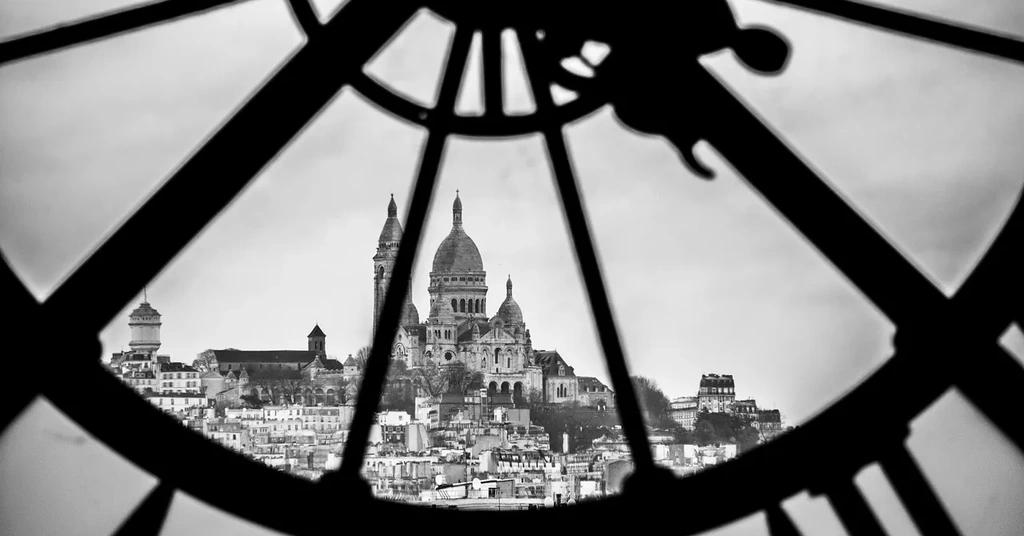
The famous clocks are among the museum’s most iconic features. One large clock can be seen from the outside, while another has become one of the most popular photo spots inside the museum. Through the glass of the clock, visitors can enjoy a beautiful view across Paris. It is one of those magical moments that makes the Musée d’Orsay unforgettable.
The building also creates a wonderful contrast with the artworks. Many paintings inside the museum show modern life in 19th-century France, including railway stations, cafés, city streets, dancers, and leisure activities. Seeing these artworks inside a former railway station adds another layer of meaning to the visit. The building and the collection speak to each other.
This is one reason why the Musée d’Orsay is so different from other museums. It is not only a place where art is displayed. It is a place where architecture, history, and art come together in a beautiful and emotional way.
Why the Musée d’Orsay Is Famous for Impressionism
The Musée d’Orsay is best known for its outstanding collection of Impressionist art. Impressionism is one of the most popular art movements in the world, but when it first appeared, it was considered radical and controversial.
In the 19th century, the official art world had strict rules. Traditional paintings were expected to show historical, mythological, religious, or heroic subjects. Artists were often judged by academic standards, with smooth brushwork, carefully finished surfaces, and classical compositions.
But a new generation of artists wanted something different. They wanted to paint the world around them. They were interested in modern Paris, natural light, outdoor scenes, movement, changing weather, reflections, and everyday life. Instead of spending all their time in studios, many of them painted outdoors, observing the changing effects of sunlight and atmosphere.
These artists included Claude Monet, Pierre-Auguste Renoir, Camille Pissarro, Alfred Sisley, Edgar Degas, Berthe Morisot, and others. Their paintings often used visible brushstrokes, brighter colors, and unusual compositions. They captured quick impressions rather than perfectly polished details.
At first, critics laughed at them. The word “Impressionism” itself came from criticism of Monet’s painting “Impression, Sunrise.” However, what began as a criticism became the name of one of the most beloved movements in art history.
The Musée d’Orsay allows visitors to see why Impressionism became so revolutionary. The paintings feel alive. They are full of light, color, movement, and emotion. They show modern life in a way that feels fresh even today.
When you walk through the Impressionist galleries, you can feel the excitement of artists who were changing the rules. Monet’s landscapes, Renoir’s joyful scenes, Degas’ dancers, and Pissarro’s city views all show a world in motion. They invite visitors to look closely at everyday beauty.
Monet at the Musée d’Orsay
Claude Monet is one of the most famous artists represented at the Musée d’Orsay. He is often considered one of the leading figures of Impressionism. His paintings are known for their delicate light, soft colors, and atmospheric beauty.
Monet was fascinated by how light changes throughout the day. He painted landscapes, rivers, gardens, bridges, snow scenes, and water reflections. Instead of focusing on sharp detail, he captured the feeling of a moment. His works often show the same subject under different weather conditions or at different times of day.
Seeing Monet’s paintings in person is very different from seeing them in books or online. The brushstrokes, colors, and textures are much more powerful when viewed directly. Visitors can see how the painting seems to come alive from a distance, even if the surface looks loose and spontaneous up close.
At the Musée d’Orsay, Monet’s works help visitors understand the central idea of Impressionism: art is not only about objects, but also about light, atmosphere, perception, and emotion.
Renoir and the Joy of Parisian Life
Pierre-Auguste Renoir brings warmth and happiness to the Musée d’Orsay collection. His paintings often show people enjoying social life, music, gardens, dancing, and relaxed moments. Renoir’s art is full of charm, softness, and human beauty.
He was especially talented at painting people. His figures often feel lively and approachable. His colors are warm, and his compositions create a sense of pleasure and movement. Many visitors are drawn to Renoir because his paintings feel joyful and intimate.
Renoir’s works are a wonderful reminder that Impressionism was not only about landscapes. It was also about modern life, friendship, leisure, and the pleasures of the city. In his paintings, Paris becomes a place of beauty, connection, and celebration.
For visitors who want to experience the positive and emotional side of Impressionism, Renoir is one of the highlights of the Musée d’Orsay.
Degas and the Secret World of Dancers
Edgar Degas is another major artist at the Musée d’Orsay. He is especially famous for his images of ballet dancers. These works are among the most recognizable and beloved artworks in the museum.
Degas was fascinated by movement, discipline, and the human body. His dancers are often shown rehearsing, stretching, waiting backstage, or performing. Instead of painting only glamorous stage moments, Degas often showed the private and demanding world behind ballet.
His compositions are unusual and modern. Figures may be cut off at the edge of the canvas. Angles may feel unexpected. The viewer sometimes feels like they are observing a private moment. This gives his works a strong sense of realism and immediacy.
Degas also worked in sculpture and pastel, and his style was very distinctive. Although he is often connected with Impressionism, he had his own approach. He was less interested in outdoor light than Monet and more interested in gesture, structure, and modern urban life.
At the Musée d’Orsay, Degas’ dancers are a must-see. They show elegance, effort, beauty, and discipline all at once.
Van Gogh: Emotion, Color, and Power
Vincent van Gogh is one of the most emotional highlights of the Musée d’Orsay. His paintings are instantly recognizable because of their strong colors, expressive brushstrokes, and intense feeling.
Van Gogh’s life was difficult, but his art became one of the most powerful forces in modern painting. He used color not only to describe the world, but also to express emotion. His landscapes, portraits, and still lifes are filled with energy and movement.
Standing in front of a Van Gogh painting is often a deeply moving experience. His brushstrokes seem alive. The colors feel intense and personal. Even a simple subject can become dramatic and unforgettable.
The Musée d’Orsay has important works by Van Gogh, and they are among the most visited paintings in the museum. For many travelers, seeing Van Gogh in Paris is one of the most memorable parts of their cultural journey.
Van Gogh belongs to the Post-Impressionist movement, which came after Impressionism. Post-Impressionist artists used the discoveries of Impressionism but added stronger structure, symbolism, emotion, or personal expression. Van Gogh’s work shows how art moved toward modernism and changed forever.
Cézanne, Gauguin, and the Road to Modern Art
The Musée d’Orsay also helps visitors understand what happened after Impressionism. Artists such as Paul Cézanne and Paul Gauguin took art in new directions.
Cézanne was interested in structure, form, and composition. His paintings often show landscapes, still lifes, and figures built from strong shapes and careful arrangements. He had a major influence on later artists, including the Cubists. Many people consider Cézanne one of the fathers of modern art.
Gauguin, on the other hand, was interested in color, symbolism, and imagination. His works often use bold colors and simplified forms. He moved away from realistic representation and searched for deeper emotional and spiritual meaning.
Together with Van Gogh, Cézanne and Gauguin show how artists moved beyond Impressionism. They opened the door to the art of the 20th century. A visit to the Musée d’Orsay is therefore not only a look at beautiful paintings. It is a journey through the transformation of modern art.
Manet and the Birth of Modern Painting
Édouard Manet is one of the most important figures in the history of art, and the Musée d’Orsay is a wonderful place to understand his influence. Manet is often seen as a bridge between Realism and Impressionism. He challenged traditional painting before the Impressionists became famous.
Manet painted modern life with boldness and confidence. His subjects, compositions, and techniques shocked many people in his time. He did not always follow academic rules, and his paintings often felt direct, modern, and provocative.
For later artists, Manet was a powerful inspiration. He showed that modern life itself could be a serious subject for art. He helped open the way for painters who wanted to break away from tradition and create something new.
At the Musée d’Orsay, Manet’s works remind visitors that artistic revolutions do not happen suddenly. They are built step by step by courageous artists who are willing to challenge expectations.
Realism: Art Before Impressionism
Before Impressionism, Realism played an important role in changing art. Realist artists wanted to show ordinary people, workers, rural life, and everyday scenes with honesty and seriousness. Instead of idealized heroes or mythological subjects, they painted the real world.
Gustave Courbet and Jean-François Millet are two important Realist artists connected with this period. Their works helped prepare the way for Impressionism because they challenged the idea that only grand historical themes were worthy of art.
Realism brought attention to ordinary life. It made workers, farmers, and simple landscapes important subjects. This was a major shift in artistic thinking.
At the Musée d’Orsay, visitors can see how Realism, Impressionism, and Post-Impressionism are connected. The museum tells a story of gradual change, from traditional art to modern expression.
Sculpture and Decorative Arts at the Musée d’Orsay
Although the Musée d’Orsay is famous for paintings, it also has an impressive collection of sculpture, decorative arts, photography, furniture, and architectural elements. These collections help visitors understand the wider artistic world of the 19th century.
The central hall of the museum displays many sculptures in a dramatic setting. Walking among them gives visitors a sense of the scale and ambition of 19th-century art. The sculptures show classical themes, historical figures, symbolic subjects, and emotional human forms.
The decorative arts collection includes furniture, objects, and design pieces that show how beauty entered everyday life. These works reflect the taste, luxury, and craftsmanship of the period.
The museum also includes photography, which was a new and revolutionary medium in the 19th century. Photography changed the way people saw reality and influenced painters as well.
This variety makes the Musée d’Orsay a complete cultural experience. It is not only about paintings. It is about the entire artistic world of a remarkable period.
The Famous Clock: One of the Most Iconic Views in Paris
No visit to the Musée d’Orsay feels complete without seeing the famous clock. The giant clock is a reminder of the building’s railway station past, but today it has become one of the most photographed spots in the museum.
Visitors love standing near the clock and looking through it toward Paris. The view creates a beautiful connection between the museum interior and the city outside. It is also a symbolic moment: time, history, travel, art, and Paris all come together.
The clock is especially popular because it offers a unique photo opportunity. However, it is more than a photo spot. It represents the identity of the Musée d’Orsay itself. This museum is a place where the past has been transformed into something new and inspiring.
Why the Musée d’Orsay Is Easier to Visit Than Some Larger Museums
Paris has many large museums, and some visitors feel overwhelmed by them. The Louvre, for example, is enormous and can be difficult to navigate without a plan. The Musée d’Orsay is also rich and impressive, but it often feels more manageable.
Its layout is easier to understand, and the collection covers a more focused period. This makes it a great choice for visitors who want a meaningful museum experience without feeling lost.
Of course, the Musée d’Orsay is still a major museum, and it contains many masterpieces. Visitors can easily spend several hours inside. However, because the museum focuses mainly on art from the 19th and early 20th centuries, the story is easier to follow.
This is one reason why a guided visit can be especially valuable. With an expert guide, visitors can focus on the most important artworks, understand the historical context, and enjoy the museum without stress.
Best Way to Experience the Musée d’Orsay
The best way to experience the Musée d’Orsay depends on your travel style. Some visitors enjoy wandering slowly and discovering artworks independently. Others prefer a guided route that explains the highlights clearly.
If you are visiting for the first time, a guided tour is highly recommended. A guide can help you understand the connections between artists, movements, and historical events. Instead of simply seeing famous paintings, you learn why they matter.
A good guided visit can include the history of the building, the rise of Realism, the birth of Impressionism, the development of Post-Impressionism, and the stories behind artists such as Monet, Renoir, Degas, Van Gogh, Cézanne, Gauguin, and Manet.
This makes the museum experience richer and more memorable. Art becomes easier to understand when someone brings it to life through stories and explanations.
Musée d’Orsay for First-Time Visitors
For first-time visitors to Paris, the Musée d’Orsay is an excellent choice. It offers a perfect balance of beauty, history, and accessibility. The artworks are famous but also emotionally approachable. Many paintings show scenes that are easy to enjoy even without deep art knowledge.
Visitors can admire glowing landscapes, elegant dancers, expressive portraits, peaceful gardens, and lively scenes of Parisian life. The museum also gives a strong sense of French culture and the artistic energy of Paris.
If your time in Paris is limited, the Musée d’Orsay is still worth including in your itinerary. It can be visited in a few hours, especially with a planned route. For many travelers, it becomes one of the highlights of their trip.
Musée d’Orsay for Couples
Paris is famous as a romantic city, and the Musée d’Orsay is a wonderful place for couples. The atmosphere is elegant and inspiring. The paintings often show beauty, emotion, and intimate moments. The building itself is dramatic and memorable.
Walking through the galleries together can be a peaceful and meaningful experience. Couples can enjoy the colors of Impressionist art, the emotional power of Van Gogh, and the beautiful view from the clock area.
For couples looking for a cultural activity in Paris, the Musée d’Orsay offers something more personal than a simple sightseeing stop. It is a place where art and emotion meet.
Musée d’Orsay for Families
The Musée d’Orsay can also be a good museum for families. Many children and teenagers respond well to Impressionist paintings because they are colorful and often show recognizable scenes. Dancers, animals, landscapes, gardens, and portraits can be easier to enjoy than more formal historical paintings.
A guided tour can make the visit more engaging for younger visitors. Stories about artists, daily life in Paris, and the transformation of the railway station can help keep the experience interesting.
Families should plan the visit carefully and avoid trying to see everything. Focusing on highlights is usually the best strategy.
Practical Tips for Visiting the Musée d’Orsay
To make the most of your visit, it is helpful to plan ahead. The Musée d’Orsay is very popular, and lines can be long during busy travel periods. Booking tickets or a guided tour in advance can make the experience smoother.
Comfortable shoes are recommended because you will walk and stand for much of the visit. It is also a good idea to give yourself enough time. Even if you only plan to see the highlights, the museum deserves a relaxed pace.
Photography rules may vary depending on exhibitions and museum policies, so always check the signs inside. Some areas may be crowded, especially near famous works and the clock, so patience is useful.
If you are interested in art history, consider reading a little about Impressionism before your visit. However, you do not need to be an expert. The museum is enjoyable even if you come with simple curiosity.
What Not to Miss at the Musée d’Orsay
While every visitor has different interests, there are several experiences you should not miss:
- The grand central hall of the former railway station
- The Impressionist galleries
- Paintings by Monet, Renoir, Degas, and Pissarro
- Van Gogh’s expressive masterpieces
- Works by Cézanne and Gauguin
- Important paintings by Manet
- The museum’s sculpture collection
- The famous giant clock
- Views over Paris from inside the museum
- The architectural details of the building itself
These highlights give visitors a complete introduction to the Musée d’Orsay and its unique atmosphere.
Why the Musée d’Orsay Belongs on Every Paris Itinerary
Paris is full of unforgettable places, but the Musée d’Orsay has a special place in the city’s cultural life. It connects history, art, architecture, and emotion in a way that few museums can match.
The building tells the story of modern transportation and the 1900 Universal Exhibition. The artworks tell the story of artistic revolution. The location connects the museum to the Seine, the Louvre, and the wider beauty of Paris.
A visit to the Musée d’Orsay helps travelers understand why Paris became one of the great capitals of art. The city was not only a place where artists lived. It was a place that inspired them, challenged them, and gave them new subjects to paint.
From the cafés and boulevards to the gardens and riverbanks, Paris appears again and again in the art of the Musée d’Orsay. After visiting the museum, you may see the city differently. The light, streets, bridges, and daily life of Paris may feel more artistic and meaningful.
Book a Musée d’Orsay Guided Tour for a Deeper Experience
If you want to enjoy the museum in the best possible way, booking a Musée d’Orsay Guided Tour is a smart choice. With an expert guide, the museum becomes easier to understand and more enjoyable to explore.
A guide can explain the history of the former railway station, introduce the most important artistic movements, and reveal the stories behind the masterpieces. You will learn why Impressionism was revolutionary, why Van Gogh’s works are so emotional, how Degas captured movement, and how Cézanne helped shape modern art.
Instead of walking through the galleries without context, you can follow a clear and meaningful route. This saves time and helps you focus on the most important highlights.
A Musée d’Orsay Guided Tour is ideal for first-time visitors, art lovers, couples, families, and anyone who wants a richer cultural experience in Paris. It turns a museum visit into a memorable journey through creativity, beauty, and history.
Final Thoughts: The Musée d’Orsay Is a Spectacular Paris Treasure
The Musée d’Orsay is one of the most spectacular museums in Paris. Its setting inside a former railway station makes it architecturally unique, while its collection of Impressionist and Post-Impressionist masterpieces makes it one of the most important art museums in the world.
Visitors come to see Monet, Renoir, Degas, Van Gogh, Cézanne, Gauguin, Manet, and many other famous artists. But they leave with much more than a list of names. They leave with memories of color, light, emotion, architecture, and the spirit of Paris.
The museum tells the story of artists who dared to see the world differently. They painted modern life, natural light, personal emotion, and everyday beauty. Their courage changed the history of art forever.
Whether you are visiting Paris for the first time or returning to the city again, the Musée d’Orsay is a must-see attraction. It is beautiful, inspiring, educational, and unforgettable.
If you want to experience the best of the museum, consider joining a Musée d’Orsay Guided Tour. With the help of an expert guide, you can discover the stories behind the masterpieces and enjoy one of the most rewarding cultural experiences in Paris.
The Musée d’Orsay is not only a museum. It is a journey through time, beauty, and artistic genius. It is a place where Paris shows its creative soul.