

Barcelona Cathedral vs Sagrada Familia
Barcelona is one of the most beautiful cities in Europe, filled with history, art, architecture, and unforgettable landmarks. For many visitors, two religious monuments stand out above all others: the Cathedral of Barcelona and the Sagrada Familia. Both are impressive, both are deeply connected to the city, and both deserve attention during your trip. However, they offer very different experiences. If you are planning a Cathedral of Barcelona, it is important to understand how this historic Gothic cathedral compares with the world-famous Sagrada Familia. Many travelers confuse the two monuments, but they are not the same. The Cathedral of Barcelona is the city’s historic cathedral, located in the Gothic Quarter. The Sagrada Familia is Gaudí’s famous basilica, located in the Eixample district. A Cathedral of Barcelona takes you into the medieval heart of the city. A visit to the Sagrada Familia introduces you to the creative genius of Antoni Gaudí and the modernist imagination of Barcelona. Both monuments are beautiful, but they tell different stories. This Barcelona Cathedral vs Sagrada Familia comparison walks through the history, architecture, atmosphere, cost, timing, and practical details of each landmark, so you can decide which one deserves your time, or discover why visiting both is worth the effort.
What Is the Cathedral of Barcelona?
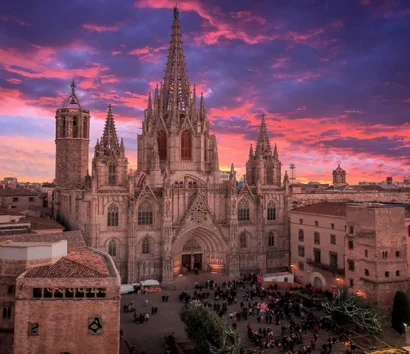
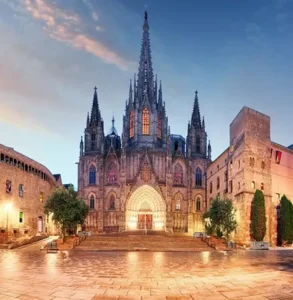
The Cathedral of Barcelona is officially known as the Cathedral of the Holy Cross and Saint Eulalia. It is located in the Gothic Quarter, one of the oldest and most atmospheric parts of the city. The cathedral is dedicated to Saint Eulalia, one of Barcelona’s patron saints, and it remains one of the most important religious buildings in the city. The present Gothic cathedral began construction in 1298 and was built on the site of earlier Christian buildings. Its construction continued over centuries, and the cloister was completed in 1448. The cathedral’s façade, which many visitors admire today, was completed later in a neo-Gothic style. A Cathedral of Barcelona is perfect for travelers who want to experience the historic and spiritual side of the city. Inside, you can admire high vaulted ceilings, Gothic columns, stained-glass windows, chapels, religious artworks, and a peaceful cloister. One of the most charming parts of the cathedral is the cloister, where 13 white geese live. These geese are connected to the legend of Saint Eulalia and symbolize her age at the time of her martyrdom.
What Is the Sagrada Familia?
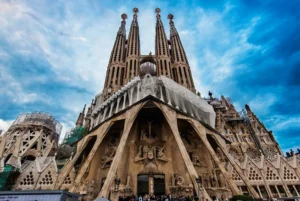
The Sagrada Familia is one of the most famous landmarks in the world. Unlike the Cathedral of Barcelona, it is not the historic cathedral of the city. It is a basilica designed by Antoni Gaudí, one of the most important architects in Catalan history. Construction of the Sagrada Familia began in 1882. In 1883, Antoni Gaudí took over the project and transformed it into a unique architectural vision. More than 140 years after the cornerstone was laid, construction has continued into the modern period, making it one of the most extraordinary building projects in Europe. The Sagrada Familia is famous for its symbolic façades, tall towers, organic shapes, colorful stained glass, and powerful religious meaning. The Nativity façade and crypt were added to the UNESCO World Heritage listing connected to the Works of Antoni Gaudí in 2005. In 2010, Pope Benedict XVI consecrated the church and designated it as a minor basilica. A visit to the Sagrada Familia is dramatic, colorful, and emotional. The interior is filled with light and designed to feel almost like a stone forest. It is one of the greatest examples of Gaudí’s imagination and remains one of Barcelona’s most popular attractions.
Cathedral of Barcelona: A Medieval Experience
A Cathedral of Barcelona offers something very different from the Sagrada Familia. While the Sagrada Familia feels modern, symbolic, and visionary, the Cathedral of Barcelona feels ancient, traditional, and deeply connected to the old city. The cathedral stands at the center of the Gothic Quarter, surrounded by narrow streets, Roman remains, historic squares, and traditional cafés. This makes the visit especially atmospheric. Before you even enter the cathedral, you feel the medieval character of Barcelona around you. Inside the cathedral, the atmosphere is calm and spiritual. The dark stone, Gothic arches, chapels, and soft light create a peaceful environment. It is a place where visitors can slow down and connect with centuries of history. A Cathedral of Barcelona is also easier to combine with a walking route through the old town. After your visit, you can explore Plaça Sant Jaume, Roman walls, Plaça del Rei, La Rambla, or the El Born district. For travelers who want to understand the historic roots of Barcelona, the cathedral is an excellent starting point.
Sagrada Familia: A Modernist Masterpiece
The Sagrada Familia offers a completely different type of experience. It is not located in the medieval center, but in the Eixample district, an area known for wide streets and modernist architecture. This setting already creates a different feeling. A visit to the Sagrada Familia is more focused on Gaudí, symbolism, and architectural innovation. Every detail has meaning. The façades tell biblical stories, the towers represent religious figures, and the interior uses light, color, and structure in a unique way. The Sagrada Familia is usually busier and requires more advance planning. Many visitors book tickets early because it is one of the most visited monuments in Spain. It is a major bucket-list attraction and a must-see for architecture lovers. However, the visit can feel more crowded and structured compared with the Cathedral of Barcelona. That does not make it less beautiful, but it does create a different atmosphere.
Which One Is More Historic?
Both monuments are historic, but in different ways. The Cathedral of Barcelona is older and more directly connected to medieval Barcelona. Its Gothic structure, chapels, cloister, and dedication to Saint Eulalia tell the story of the city’s religious and civic life over many centuries. The Sagrada Familia is newer, but it is historically important because of Gaudí and its extraordinary construction story. It represents Barcelona’s modernist identity and the city’s creative spirit from the late 19th century onward. If you want medieval history, choose a Cathedral of Barcelona. If you want modernist architecture and Gaudí’s vision, choose the Sagrada Familia.
Which One Is Better for Architecture Lovers?
For architecture enthusiasts, the real question isn’t which building is “better,” it’s which architectural language speaks to you more. The Barcelona Cathedral and the Sagrada Familia represent two entirely different chapters of Catalan design, separated by nearly 600 years of thinking about space, structure, and symbolism.
The Cathedral: Discipline and Verticality
The Cathedral of Barcelona is a textbook example of Catalan Gothic architecture, a style defined by restraint rather than spectacle. Its ribbed vaults, pointed arches, and flying buttresses follow strict structural logic, every element exists to direct weight downward and outward, allowing the walls to rise higher and the windows to grow larger. Architecture lovers who appreciate engineering discipline, proportion, and the slow accumulation of craftsmanship across centuries will find the cathedral deeply rewarding. Look closely at the cloister’s stonework, the tracery in the windows, and the way light filters through narrow openings to create a contemplative, shadowed atmosphere. This is architecture built to express permanence and order.
The Sagrada Familia: Innovation and Symbolism
Gaudí approached architecture as a living system rather than a fixed style. He borrowed structural ideas from nature, tree-like columns that branch into the ceiling, hyperbolic paraboloids, catenary arches calculated using hanging chain models, and fused them with dense religious symbolism. Every façade tells a different story: the Nativity façade celebrates life and birth with organic, flowing carvings, while the Passion façade is deliberately angular and severe to convey suffering. For architecture lovers drawn to innovation, symbolism, and buildings that challenge convention, the Sagrada Familia offers something genuinely unlike anything else in the world, a building still being completed using digital modeling techniques that didn’t exist when Gaudí began.
Two Different Design Philosophies
If you think of architecture as an evolving conversation, the cathedral represents centuries of collective, anonymous craftsmanship refined through the Gothic tradition, while the Sagrada Familia represents one architect’s singular, evolving vision, later continued by generations of designers trying to interpret what Gaudí left behind. Comparing them isn’t really about which is more skilled or more beautiful, it’s about experiencing two opposite ends of architectural thinking: structured tradition versus radical individual expression.
The Verdict for Architecture Lovers
If you had to choose only one, ask yourself what draws you in more: the disciplined beauty of Gothic engineering, or the daring, symbolic experimentation of modernist design. Many architecture enthusiasts find that visiting both back-to-back, ideally in the same day, is what makes the comparison so powerful. Seeing Gothic verticality in the morning and Gaudí’s organic forms in the afternoon lets you feel, in a matter of hours, the full arc of Barcelona’s architectural evolution.
Which One Is Better for a Short Visit?
If you have limited time in Barcelona, the Cathedral of Barcelona can be easier to include in your itinerary. It is centrally located in the Gothic Quarter, close to many other attractions. You can visit the cathedral and then continue exploring the old town on foot. A Cathedral of Barcelona is perfect if you want a cultural experience without moving far from the city center. It also works well as part of a half-day itinerary. The Sagrada Familia usually requires more planning. You need to travel to the Eixample district, choose a specific entry time, and allow enough time for the visit. It is absolutely worth seeing, but it can be more demanding in a busy schedule.
Which One Is More Peaceful?
The Cathedral of Barcelona often feels more traditional and peaceful, especially inside the chapels and cloister. The cloister, with its greenery and geese, offers a calm break from the busy streets outside. The Sagrada Familia can also feel spiritual, especially when sunlight fills the interior. However, because it is one of Barcelona’s most famous attractions, it is often more crowded. If you want a quieter and more reflective experience, a Cathedral of Barcelona may be the better choice. If you want a powerful visual and architectural experience, the Sagrada Familia is hard to beat.
Cost and Tickets: What to Expect?
Budget is often a deciding factor in this Barcelona Cathedral vs Sagrada Familia decision, and the pricing structures reflect their different visitor experiences. Barcelona Cathedral pricing is generally more affordable. General admission for the full tourist route, which includes the choir, rooftop access, and chapterhouse, typically runs around 16 euros for adults, with reduced rates for children. Importantly, admission is free during designated worship hours, though during those times you won’t have access to the choir, rooftop, or guided areas. This makes the cathedral a flexible option for travelers on a tighter budget, especially since audio guides are usually included or available as a low-cost add-on. Sagrada Familia pricing is higher and more tiered. Basic entry starts around 26 to 30 euros, with additional charges for tower access, choosing between the Nativity or Passion façade towers, guided tours, and audio guide upgrades. Because it’s one of the most visited monuments in Europe, prices tend to climb closer to peak season, and last-minute tickets are often sold out entirely. If you’re comparing value for money, the cathedral offers a lower-cost, still rich experience, while the Sagrada Familia is a bigger investment that many visitors feel is justified by the sheer scale and uniqueness of what they see. Booking both in advance, especially the Sagrada Familia, is essential during spring and summer months when demand is highest.
Best Time to Visit Each Landmark
Timing your visit well can make a significant difference in how much you enjoy either site, since both attract large numbers of tourists throughout the year. For the Cathedral of Barcelona, early mornings on weekdays tend to be the quietest, particularly right after opening. Visiting between 9:30 and 10:30 AM lets you experience the cloister and nave before tour groups and cruise ship crowds arrive later in the day. Late afternoon, especially between 5 and 6 PM, is another excellent window, when soft sunlight filters through the stained glass and creates a warmer, more atmospheric interior. Weekends and religious holidays can bring larger crowds due to services, so weekday visits are generally more predictable for tourists. For the Sagrada Familia, timing matters even more because of strict entry slots. Early morning slots, ideally the first entry of the day, offer the calmest experience and the best light through the stained glass windows, which change color dramatically depending on the sun’s position. The Nativity façade catches morning light beautifully, while the Passion façade is better lit in the afternoon. Avoid midday visits during summer, when both the interior and the surrounding plaza become extremely crowded. Booking tickets several weeks in advance, especially for peak season between May and September, is strongly recommended. Seasonal considerations apply to both landmarks. Spring, from April to May, and early autumn, from September to October, offer the most comfortable weather and moderate crowd levels. Summer brings the largest crowds and highest temperatures, particularly challenging inside the Sagrada Familia’s glass-heavy interior. Winter offers the quietest visits overall, though some chapels or areas may have reduced hours around major holidays.
Getting There: Location and Transportation
Understanding how to reach each landmark helps visitors plan an efficient day, especially if you’re combining both stops. Reaching the Cathedral of Barcelona is straightforward given its central location in the Gothic Quarter. The nearest metro stop is Jaume I on Line 4, just a few minutes’ walk from the cathedral entrance. Alternatively, Liceu on Line 3 is slightly further but still walkable through the atmospheric streets of the old town. Several bus routes, including V15, V19, and 59, stop within close proximity. Because the surrounding streets are narrow and pedestrianized, taxis and rideshares typically drop passengers off at the edge of the Gothic Quarter, requiring a short walk on foot. This walk is part of the experience, as it takes you past Roman ruins, small squares, and historic façades before you even reach the cathedral doors. Reaching the Sagrada Familia is equally simple but leads you into a very different part of the city. The Sagrada Familia metro stop, served by both Line 2 and Line 5, sits almost directly beneath the basilica, making it one of the most accessible major attractions in Barcelona. Numerous bus lines also stop nearby, and the Barcelona Bus Turístic hop-on-hop-off route includes it as a major stop. Because the Eixample district is built on a grid system with wide avenues, getting around this area feels noticeably different from the winding lanes of the Gothic Quarter, more organized, more modern, and easier to navigate quickly. Traveling between the two takes roughly 20 to 25 minutes by metro, with one change required depending on your starting point, or about 30 to 35 minutes by taxi during normal traffic. This relatively short connection time is exactly why so many visitors choose to combine both landmarks into a single day, using the transition itself as a way to feel the shift between medieval and modernist Barcelona.
Accessibility and Visitor Comfort
Both landmarks have made efforts to accommodate visitors with mobility needs, though the experiences differ due to the buildings’ ages and structural differences. The Cathedral of Barcelona offers an adapted entrance on Carrer del Bisbe that leads directly into the cloister, avoiding the front steps entirely. Most of the interior route is manageable for visitors using wheelchairs or those with limited mobility, though a few chapels and the crypt involve small steps that cannot be modified due to the building’s protected historic status. An elevator provides access to the rooftop terrace, though the terrace itself still involves some uneven surfaces and light stair sections. The Sagrada Familia has invested significantly in accessibility given its modern construction techniques and ongoing renovations. Ramps, elevators, and accessible restrooms are available throughout most of the visitor route. However, tower access remains limited for visitors with mobility challenges, since the narrow spiral staircases in the towers were not designed with modern accessibility standards in mind. Visitors with disabilities of 33 percent or more often qualify for free or discounted admission at both sites, though documentation requirements should be checked in advance. For families traveling with strollers, both sites are manageable, though the cathedral’s uneven medieval stonework requires more care, while the Sagrada Familia’s modern flooring is generally smoother and easier to navigate.
Can You Visit Both in One Day?
In this Barcelona Cathedral vs Sagrada Familia comparison, one question comes up again and again: can you actually see both in a single day? Yes, you can visit both the Cathedral of Barcelona and the Sagrada Familia in one day. In fact, this is a great way to understand the contrast between medieval and modern Barcelona. You could start with a Cathedral of Barcelona in the morning. After exploring the Gothic Quarter, take time for lunch nearby. Then visit the Sagrada Familia in the afternoon. This route gives you a beautiful journey through Barcelona’s history, from Gothic architecture to Gaudí’s modernist masterpiece. Visiting both monuments helps you understand why Barcelona is so special. The city is not defined by only one period or one style. It is a place where Roman, medieval, Gothic, modernist, and contemporary layers all exist together.
Why Choose a Cathedral of Barcelona?
A Cathedral of Barcelona is an excellent choice for travelers who want to discover the real historic heart of the city. It is ideal for visitors who enjoy old streets, Gothic architecture, religious history, local legends, and a self-paced cultural experience. The cathedral is also a great option for people who want to avoid confusion with the Sagrada Familia. The Cathedral of Barcelona is the actual historic cathedral of the city. It has a different identity, a different location, and a different atmosphere. With an entrance ticket and audio guide, your visit becomes even more meaningful. You can explore at your own pace while learning about Saint Eulalia, the chapels, the cloister, the architecture, and the cathedral’s role in Barcelona’s history.
Final Thoughts: Barcelona Cathedral vs Sagrada Familia
So, which one should you visit in this Barcelona Cathedral vs Sagrada Familia comparison? The best answer is both, if your schedule allows. They are two completely different monuments and together they show the richness of Barcelona. The Cathedral of Barcelona represents the medieval, Gothic, and historical soul of the city. The Sagrada Familia represents creativity, faith, modernism, and Gaudí’s extraordinary vision. However, if you want to explore the old town, discover medieval Barcelona, and enjoy a calmer cultural experience, a Cathedral of Barcelona is the perfect choice. It offers history, architecture, spirituality, local legends, and a beautiful location in the Gothic Quarter. For visitors to programtickets.com, booking a Cathedral of Barcelona with audio guide is one of the best ways to understand the historic center of Barcelona. It is flexible, informative, and easy to include in any itinerary. The Sagrada Familia may be the most famous church in Barcelona, but the Cathedral of Barcelona is the historic heart of the city. A Cathedral of Barcelona helps you discover the Barcelona that existed long before Gaudí, long before modern tourism, and long before the wide avenues of the modern city. If you want to feel the medieval atmosphere, walk through the Gothic Quarter, and step inside one of the city’s most meaningful monuments, the Cathedral of Barcelona should be on your list. Whichever way you decide this Barcelona Cathedral vs Sagrada Familia comparison, both landmarks offer an unforgettable window into the soul of the city.