

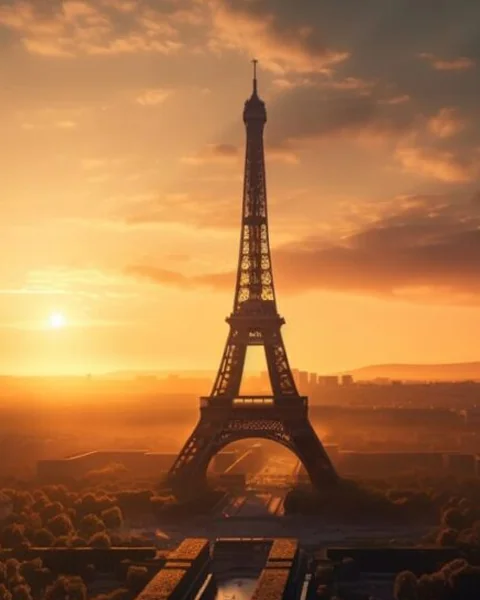
There is perhaps no structure on Earth more instantly recognizable than the Eiffel Tower. Standing tall over the Seine in the heart of Paris, this iron giant has become shorthand for romance, elegance, and French culture itself. Yet behind its graceful silhouette lies a story filled with controversy, genius, near-destruction, and a surname that became forever synonymous with one of the greatest engineering achievements in history. In this blog post, we take a deep dive into the Eiffel Tower: its remarkable history, the engineering behind its construction, and the fascinating story of the man whose name it carries.
Whether you are planning a trip to Paris, researching for a school project, or simply curious about how this beloved monument came to be, understanding the full story of the Eiffel Tower adds a rich layer of appreciation to every photo and every visit. Few landmarks carry as much drama in their origin story as the Eiffel Tower, and few names in engineering history are as well known as the one etched onto its base.
A Brief Overview of the Eiffel Tower
Before diving into the details, it helps to understand the basics. The Eiffel Tower stands at 330 meters (1,083 feet) tall, including its modern antennas, making it one of the tallest structures in France. Built entirely from wrought iron, the tower weighs approximately 10,100 tonnes and consists of over 18,000 individual metal parts, held together by roughly 2.5 million rivets. It features three visitor levels: the first floor at 57 meters, the second floor at 115 meters, and the summit at 276 meters.
The Eiffel Tower was completed in 1889 and was the tallest man-made structure in the world for 41 years, a record it held until the Chrysler Building was completed in New York in 1930. Today, the Eiffel Tower welcomes nearly seven million visitors annually, making it one of the most visited paid monuments on the planet. But to truly appreciate the Eiffel Tower, we need to go back to the moment it was nothing more than a bold idea on paper.
The History of the Eiffel Tower
Origins and the 1889 World’s Fair
The story of the Eiffel Tower begins with a celebration. In 1889, France hosted the Exposition Universelle, a World’s Fair marking the 100th anniversary of the French Revolution. The French government wanted a centerpiece structure that would demonstrate the nation’s industrial and engineering prowess to the entire world. A design competition was launched, inviting engineers and architects to submit proposals for a monument that would stand at the entrance of the fairgrounds on the Champ de Mars.
Over 100 designs were submitted, ranging from practical to outright bizarre, including one proposal for a giant guillotine-shaped tower. Ultimately, the winning design came from the engineering firm of Gustave Eiffel, though the tower’s actual concept was developed primarily by two of his senior engineers, Maurice Koechlin and Émile Nouguier, with architectural refinements contributed by Stephen Sauvestre. The Eiffel Tower, as we now know it, was born from this collaborative vision, though it was Eiffel’s firm, resources, and reputation that ultimately built and completed the structure.
The Design Competition and Early Controversy
Even before construction began, the Eiffel Tower faced fierce criticism. A group of prominent Parisian artists, writers, and intellectuals – including author Guy de Maupassant and composer Charles Gounod – signed a public petition titled “Artists Against the Eiffel Tower,” denouncing the planned structure as a “gigantic black smokestack” that would disgrace the city’s elegant skyline. Critics feared the iron tower would clash with Paris’s classical architecture and become a permanent eyesore looming over the city.
Despite this backlash, construction moved forward. Gustave Eiffel, confident in his engineering vision, famously responded to critics by suggesting that the tower’s grandeur and scientific value would eventually win over even its harshest opponents – a prediction that proved remarkably accurate as the Eiffel Tower grew to become one of the most beloved monuments in the world.
Constructing the Eiffel Tower
Construction of the Eiffel Tower began in January 1887 and was completed in just over two years, an astonishingly fast timeline for a structure of its scale and complexity, especially by 19th-century standards. Around 300 workers assembled the tower using prefabricated iron components manufactured off-site, a construction method that was highly innovative for its time and significantly reduced the risk to workers.
Remarkably, despite the height and danger involved in building the Eiffel Tower, only one worker died during construction, a testament to Eiffel’s rigorous safety standards, which included the use of guardrails and screens – precautions virtually unheard of on construction sites of that era. The tower was completed on March 31, 1889, just in time for the opening of the World’s Fair, and Gustave Eiffel himself climbed to the top to plant the French flag, marking the tower’s official completion.
Near-Demolition and an Unlikely Survival
One of the lesser-known chapters in the story of the Eiffel Tower is just how close it came to being torn down. The original permit for the tower granted only a 20-year lease, after which the structure was slated for demolition, since it had originally been conceived as a temporary exhibit for the World’s Fair. By 1909, the Eiffel Tower’s future looked uncertain.
What saved the Eiffel Tower from the wrecking ball was its usefulness as a radiotelegraph station. Gustave Eiffel, recognizing the tower’s potential beyond mere spectacle, had proposed using it for scientific experiments and wireless communication as early as the 1890s. By the early 1900s, the tower was transmitting radio signals across Paris and beyond, and its practical military and communication value ultimately convinced the French government to let it stand.
The Eiffel Tower Through Wartime
The Eiffel Tower played a surprisingly active role during both World Wars. During World War I, the tower’s radio transmitters were used to intercept enemy communications, reportedly helping to jam German messages and even contributing to the capture of the infamous spy Mata Hari. During World War II, as Nazi forces occupied Paris, legend holds that French resistance members cut the tower’s elevator cables, forcing German soldiers to climb the stairs to raise their flag – and that repair parts mysteriously “could not be found” for the remainder of the occupation.
When Allied forces liberated Paris in 1944, the Eiffel Tower once again became a symbol of French resilience and pride, standing tall over a city that had endured years of occupation.
The Eiffel Tower in the Modern Era
Since the mid-20th century, the Eiffel Tower has undergone numerous renovations, structural reinforcements, and technological upgrades, including new lighting systems, upgraded elevators, and reinforced safety features. In 1985, the tower’s now-iconic golden lighting was introduced, and since the year 2000, the Eiffel Tower has sparkled with thousands of flashing lights for several minutes at the top of every hour after dark, a dazzling display that has become a beloved nightly tradition for locals and tourists alike.
Today, the Eiffel Tower stands not only as a monument but as a fully functioning broadcast tower, tourist destination, and cultural icon, repainted every seven years using approximately 60 tonnes of paint to protect the iron structure from rust and weathering. From a controversial “temporary” exhibit to the eternal symbol of Paris, the history of the Eiffel Tower is a story of vision triumphing over doubt.
The Building: Engineering Behind the Eiffel Tower
The Eiffel Tower is as much a triumph of engineering as it is a work of art, and understanding its structural design reveals why it has stood strong for over 130 years. Constructed almost entirely from puddled iron (a type of wrought iron), the Eiffel Tower’s lattice design was deliberately chosen for both strength and efficiency. Unlike solid stone monuments, the open ironwork allows wind to pass through the structure rather than push against it, dramatically reducing wind resistance – a critical engineering consideration for a structure of such extreme height.
In fact, the Eiffel Tower is designed to sway only a few centimeters in strong winds, a remarkable feat of structural flexibility. Interestingly, the tower also changes height slightly depending on the weather: on hot days, the iron expands and the Eiffel Tower can grow by as much as 15 centimeters, while it contracts slightly in colder temperatures.
The tower consists of four massive curved legs that taper inward as they rise, converging into a single slender column near the top. This tapering shape is not just aesthetic – it distributes the tower’s weight efficiently and provides structural stability, allowing the Eiffel Tower to support its own considerable weight of over 10,000 tonnes while remaining relatively lightweight compared to the sheer volume of space it occupies.
The Eiffel Tower features three public levels. The first floor, at 57 meters, offers a glass floor, exhibition space, and a restaurant, along with historical displays about the tower’s construction. The second floor, at 115 meters, is widely regarded as the best vantage point for panoramic photography, offering sweeping views of the Paris skyline. The summit, at 276 meters, provides the highest publicly accessible viewing platform in Paris, along with a reconstruction of Gustave Eiffel’s private office, preserved much as it looked in the late 19th century.
Getting visitors to these heights required cutting-edge elevator technology for the era. The original hydraulic elevator systems, some of which are still partially in use today, were considered a marvel of 19th-century engineering, capable of moving passengers along the tower’s curved legs at an angle rather than in a straight vertical shaft – a technical challenge that required custom-engineered elevator cars and tracks.
The Name Eiffel: The Man Behind the Monument
While millions know the Eiffel Tower by name, far fewer are familiar with the man behind it: Alexandre Gustave Eiffel. Born in Dijon, France, in 1832, Gustave Eiffel trained as a chemist before shifting his career toward structural engineering, eventually becoming one of the most accomplished and prolific engineers of the 19th century.
Long before the Eiffel Tower made his name a household word, Gustave Eiffel had already built an impressive career designing bridges, viaducts, and iron structures across Europe and beyond. His engineering firm was responsible for the Garabit Viaduct in southern France, at the time one of the highest bridges in the world, as well as numerous railway bridges throughout France, Portugal, and South America. Eiffel’s expertise in wind resistance and metal structural engineering, refined through these earlier bridge projects, directly informed the design principles later used in the Eiffel Tower.
Perhaps one of Gustave Eiffel’s most historically significant contributions, aside from the tower that bears his name, was his work on the Statue of Liberty. Eiffel’s engineering firm designed the internal iron pylon and skeletal framework that allows the Statue of Liberty’s copper exterior to stand upright and withstand wind pressure in New York Harbor – a lesser-known but crucial piece of engineering history that predates the Eiffel Tower itself.
Why Is It Called the Eiffel Tower?
Given that the actual design concept for the tower originated with engineers Maurice Koechlin and Émile Nouguier, with architectural details added by Stephen Sauvestre, some may wonder why the monument became known as the Eiffel Tower rather than being named after its original designers. The answer lies largely in business, reputation, and leadership. Gustave Eiffel purchased the patent rights to the tower’s design from Koechlin and Nouguier, personally financed a significant portion of the construction costs, and used his firm’s engineering reputation and construction expertise to bring the project to life. Because Eiffel’s company built the tower and Eiffel himself championed the project publicly, defending it against critics and overseeing its construction, the structure became permanently associated with his name.
In many ways, the Eiffel Tower represents not just the work of one man but the culmination of an entire engineering firm’s expertise, with Gustave Eiffel serving as both the financial backer and the public face of the project. His willingness to defend the tower against widespread criticism, and his foresight in proposing scientific uses that ultimately saved it from demolition, cemented his legacy as the tower’s namesake.
Gustave Eiffel’s Life After the Tower
Following the completion of the Eiffel Tower, Gustave Eiffel’s career took an unexpected turn. He became involved in the Panama Canal project, designing lock mechanisms for the ambitious but ultimately troubled French effort to build a canal through Panama. When the project collapsed amid financial scandal, Eiffel faced legal consequences, though he was later cleared of the most serious allegations against him.
In the years that followed, Gustave Eiffel largely retired from large-scale construction projects and devoted much of his remaining life to scientific research, particularly in aerodynamics and meteorology, using his own tower as a platform for wind resistance experiments. Eiffel passed away in 1923 at the age of 91, having lived to see his tower transform from a widely mocked “temporary” structure into a celebrated symbol of French innovation.
Fascinating Facts About the Eiffel Tower
Beyond the major milestones in its history, the Eiffel Tower holds a number of surprising details that reveal just how ambitious this 19th-century project truly was. For instance, the Eiffel Tower was originally painted a reddish-brown color, and its shade has been adjusted several times over the decades, gradually shifting toward the bronze-toned “Eiffel Tower Brown” used today, which is applied in three progressively lighter shades from bottom to top to create the illusion of uniform color when viewed from the ground. Repainting the Eiffel Tower is a massive undertaking, requiring teams of specialized painters to work carefully across the tower’s iron lattice roughly every seven years.
Another surprising fact is that the Eiffel Tower was never intended to be permanent at all. Had Gustave Eiffel not pushed for its use as a radio antenna, the tower’s 20-year lease would have expired in 1909, and the Eiffel Tower as we know it today might exist only in old photographs and postcards. It is a striking reminder that one of the world’s most enduring monuments nearly became one of history’s great missed opportunities.
The Eiffel Tower has also inspired numerous replicas around the world, from Las Vegas to Tokyo to Shenzhen, though none matches the scale, history, or authenticity of the original structure in Paris. Additionally, the tower has hosted an enormous range of unique events throughout its history, from Gustave Eiffel’s own scientific experiments on wind resistance and free fall, to modern-day fireworks displays, art installations, and even temporary ice rinks during the winter holiday season.
Perhaps most impressively, despite being built well over a century ago using 19th-century engineering methods and tools, the Eiffel Tower remains structurally sound today, a lasting testament to the precision and foresight of Gustave Eiffel and his team of engineers. Modern structural inspections continue to confirm the integrity of the original ironwork, reinforced periodically over the decades to meet contemporary safety standards while preserving the tower’s historic character.
The Eiffel Tower’s Enduring Legacy
Today, the Eiffel Tower stands as far more than a feat of 19th-century engineering. It has become a universal symbol of Paris, romance, and human ingenuity, appearing in countless films, artworks, photographs, and travel dreams around the world. The Eiffel Tower’s journey from a controversial “eyesore” to one of the most photographed structures on Earth mirrors a broader story about vision, resilience, and the power of standing by bold ideas in the face of criticism.
Every year, millions of visitors climb, ride, or gaze up at the Eiffel Tower, often unaware of just how close it came to being dismantled, how many engineers contributed to its design, or how the name “Eiffel” came to represent an entire era of architectural ambition. Understanding this history transforms the Eiffel Tower from a simple photo backdrop into a living monument to human creativity and perseverance.
Conclusion
From its controversial beginnings at the 1889 World’s Fair to its near-demolition, wartime intrigue, and eventual transformation into the beating heart of Parisian identity, the story of the Eiffel Tower is as remarkable as the structure itself. Behind every rivet and iron beam lies the ambition of Gustave Eiffel and the engineers who dared to build something the world had never seen before. Whether you are marveling at its silhouette from the Trocadéro Gardens or standing beneath its iron legs on the Champ de Mars, the Eiffel Tower remains a timeless reminder that even the most doubted ideas can become the world’s most beloved icons.