

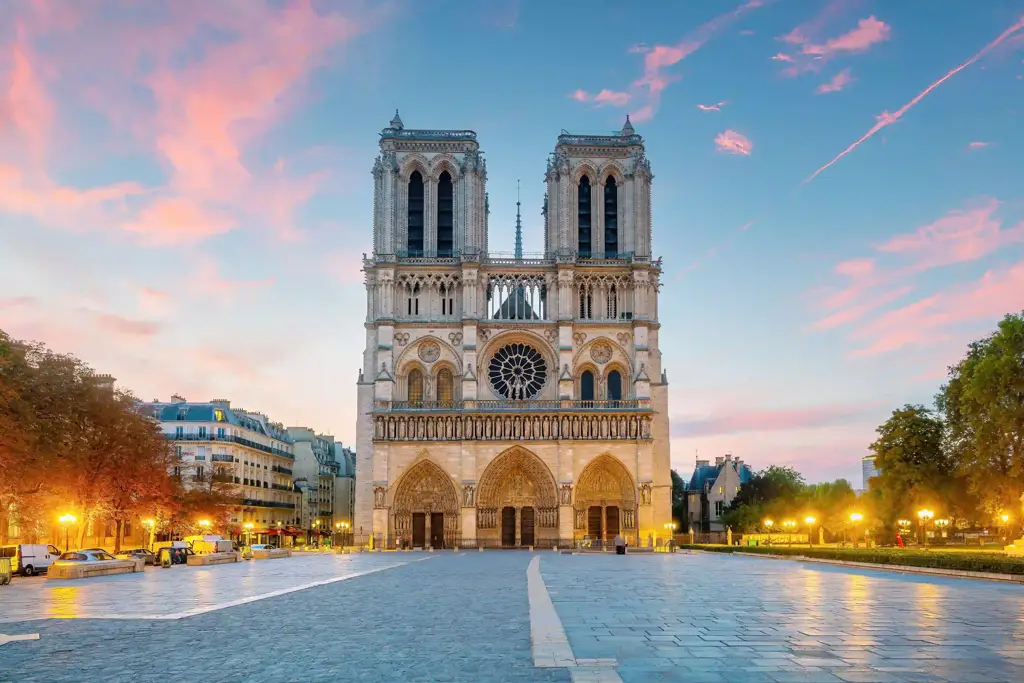
Some cities have a skyline. Paris has a silhouette you could sketch from memory before you have ever set foot there – a wrought-iron tower rising over the Seine, twin bell towers on an island, a white basilica crowning a hilltop. The famous landmarks in Paris are so deeply woven into global culture that visiting them for the first time feels less like sightseeing and more like stepping inside a memory that was never quite your own until now.
This guide walks through the essential famous landmarks in Paris – the ones that define the city’s postcard image and the ones that reward a little extra curiosity – along with the practical details that turn a rushed, queue-heavy visit into a smooth and genuinely joyful one. Whether you have three days in the city or three weeks, this is the list to build your itinerary around.
Why the Famous Landmarks in Paris Still Take Your Breath Away
Paris has been a magnet for art, architecture, and ambition for over eight centuries, and its most famous landmarks reflect nearly every era of that history. Notre-Dame Cathedral speaks to medieval devotion and engineering. The Louvre carries the legacy of French kings and Napoleon’s imperial ambitions. The Eiffel Tower, once mocked by critics as an eyesore, became the very symbol of modern Paris within a generation. Even the city’s grand boulevards, like the Champs-Élysées, were designed in the 19th century specifically to be breathtaking.
What makes the famous landmarks in Paris so rewarding to visit today is that almost all of them remain living, functioning parts of the city rather than museum pieces behind glass. Notre-Dame still holds Mass. The Luxembourg Gardens still fill with locals playing chess and reading in wicker chairs. The Seine still carries barges beneath the same bridges painted by Impressionist masters. Visiting these sites means stepping into a city that has never stopped using its own history.
1. The Eiffel Tower: The Icon That Defines the Skyline
No list of famous landmarks in Paris could begin anywhere else. Built by engineer Gustave Eiffel for the 1889 World’s Fair, the tower stands 330 meters tall and was intended to be dismantled after twenty years – it survived thanks to its usefulness as a radio transmission antenna, and it has been beloved ever since.
Visitors can ascend to three levels: the first and second floors offer wide, accessible views and glass floor sections, while the summit provides sweeping panoramas across the entire city on a clear day. Tickets sell out especially fast in summer, so booking well ahead – and choosing either early morning or after-dark slots — is the easiest way to avoid the worst of the crowds. At night, the tower’s hourly light show, with thousands of sparkling bulbs, is one of the most magical free spectacles in the city.
2. The Louvre Museum: A Palace Built for Masterpieces
The Louvre is not just one of the famous landmarks in Paris; it is the largest art museum in the world, housing roughly 35,000 works across a former royal palace that itself took nearly 800 years to build. Its most famous resident, Leonardo da Vinci’s Mona Lisa, draws crowds several rows deep, but the museum’s real riches lie in wandering less-visited wings: Egyptian antiquities, Islamic art, and monumental French paintings that rarely make it onto postcards.
I.M. Pei’s glass pyramid entrance, added in 1989, was controversial at the time but has since become a landmark of its own, its geometric lines contrasting beautifully with the palace’s classical stone façade. Because the museum is so vast, most visitors do best by choosing two or three sections to focus on rather than attempting to see everything in a single visit, and booking a skip-the-line entry ticket or guided tour saves what can otherwise be an hour or more of queuing.
3. Notre-Dame Cathedral: Restored and More Moving Than Ever
Few stories in recent Parisian history have moved the world like the April 2019 fire that devastated Notre-Dame’s roof and spire. After an extraordinary five-year restoration effort, the cathedral reopened to the public in December 2024, and visiting it today carries an emotional weight that few of the other famous landmarks in Paris can match.
Entry to the cathedral’s restored interior is free, with timed tickets available online up to two days in advance, though a standby line exists for those without reservations (expect lower priority and longer waits). Inside, a newly designed visitor path guides guests past restored chapels and artwork, and the Crown of Thorns relic is displayed on Friday afternoons. For panoramic views, tower access is ticketed separately at around €16, with the climb of 424 steps rewarding visitors with close-up views of the cathedral’s famous gargoyles and bells. Exterior restoration work continues in some areas, so scaffolding may still be visible for a couple of years, but it takes little away from the experience of standing inside this newly reborn landmark.
4. The Arc de Triomphe: Standing Guard Over the Champs-Élysées
Commissioned by Napoleon in 1806 to honor his armies, the Arc de Triomphe anchors one end of the Champs-Élysées and one of the most complex roundabouts in the world, the Place Charles de Gaulle, where twelve avenues converge in a swirl of traffic circling the monument. Visitors reach the arch safely via an underground pedestrian passage rather than crossing the roundabout on foot.
Climbing to the rooftop terrace rewards visitors with one of the best viewpoints among all the famous landmarks in Paris, since from here you can see the Eiffel Tower, the Louvre, Sacré-Cœur, and the arrow-straight run of the Champs-Élysées all from one spot. Beneath the arch, the Tomb of the Unknown Soldier burns an eternal flame, rekindled each evening at 6:30 p.m. in a quiet, moving ceremony.
5. The Champs-Élysées: The World’s Most Famous Avenue
Stretching nearly two kilometers from the Arc de Triomphe to the Place de la Concorde, the Champs-Élysées is less a single landmark than a grand stage where several of the famous landmarks in Paris meet. Lined with flagship boutiques, cafés, and cinemas, the avenue was laid out in the 17th century and gradually transformed into the glamorous boulevard it is today, hosting everything from Bastille Day military parades to the finish line of the Tour de France each July.
An evening stroll down the Champs-Élysées, watching the Arc de Triomphe glow gold in the distance, remains one of the simplest and most romantic free experiences the city offers.
6. Sacré-Cœur Basilica: A White Crown Above the City
Perched atop Montmartre, the highest natural point in Paris, the white travertine domes of Sacré-Cœur Basilica are visible from much of the city below. Completed in 1914 after four decades of construction, the basilica was built partly as a spiritual response to the turmoil of the Franco-Prussian War, and its elevated plaza remains one of the best free viewpoints among the famous landmarks in Paris.
The surrounding Montmartre neighborhood, with its cobblestone streets, the Place du Tertre filled with portrait artists, and the nearby Moulin Rouge, makes this an easy half-day combined with the basilica visit itself. Arriving by the funicular railway (covered by a standard metro ticket) is an easy alternative to the steep staircase climb.
7. Sainte-Chapelle: A Jewel Box of Stained Glass
Tucked within the Palais de la Justice on the Île de la Cité, Sainte-Chapelle is easy to walk past without knowing what lies inside, which is precisely why it surprises so many visitors. Built by King Louis IX in the 13th century to house relics including the Crown of Thorns, its upper chapel is wrapped almost entirely in stained glass — 15 towering windows depicting over a thousand biblical scenes in jewel-toned reds and blues.
On a sunny afternoon, sunlight pouring through the glass turns the chapel into one of the most photogenic interiors among all the famous landmarks in Paris, and because it draws smaller crowds than the Louvre or Notre-Dame, it is a wonderful respite from the busier sights nearby.
8. Musée d’Orsay: Impressionism in a Former Train Station
Housed inside a stunning Beaux-Arts former railway station on the Left Bank, the Musée d’Orsay holds the world’s largest collection of Impressionist and Post-Impressionist masterpieces, including works by Monet, Renoir, Degas, and Van Gogh. The building’s giant glass clock, visible from both inside and outside the museum, has become an icon in its own right, often photographed from the café behind its transparent face.
Compared to the Louvre, the Musée d’Orsay is far more manageable in scale, making it possible to see the highlights in two or three unhurried hours.
9. The Panthéon: Resting Place of French Legends
Originally built as a church, the Panthéon was repurposed during the French Revolution into a mausoleum honoring France’s most distinguished citizens. Its crypt holds the remains of Voltaire, Rousseau, Marie Curie, Victor Hugo, and Alexandre Dumas, among others, while its dome offers a lesser-known but spectacular viewpoint over the Left Bank.
Compared to some of the more crowded famous landmarks in Paris, the Panthéon tends to feel calm and contemplative, its vast neoclassical interior amplifying every footstep into a hushed echo.
10. The Seine River and Its Bridges: Paris in Motion
The Seine River is the connective thread running through nearly every famous landmark in Paris, and a boat cruise along its banks remains one of the most efficient and romantic ways to see the city. In a single hour-long trip, passengers glide past Notre-Dame, the Musée d’Orsay, the Louvre, and the Eiffel Tower, often finishing with the tower dramatically lit at night.
The bridges themselves are landmarks worth pausing for: the ornate, gold-trimmed Pont Alexandre III is widely considered the most beautiful bridge in the city, while the Pont Neuf, despite its name meaning “New Bridge,” is actually the oldest standing bridge in Paris, completed in 1607.
11. The Palace of Versailles: A Royal Day Trip
Just a 40-minute train ride from central Paris, the Palace of Versailles is technically outside the city but belongs on any serious list of famous landmarks in Paris and its surrounding region. Built for Louis XIV, the “Sun King,” Versailles remains the ultimate expression of royal excess, from the mirror-lined Hall of Mirrors, where the Treaty of Versailles was signed in 1919, to the manicured gardens stretching as far as the eye can see, complete with fountains that perform choreographed musical shows on select spring and summer weekends.
A full day is recommended for Versailles, and booking timed-entry tickets in advance is essential, since the palace draws millions of visitors annually and lines at the gates can otherwise eat up a significant portion of the visit.
12. Palais Garnier: The Paris Opera House
Immortalized as the setting for The Phantom of the Opera, the Palais Garnier is a 19th-century architectural showpiece of gilded ceilings, marble staircases, and a ceiling mural painted by Marc Chagall above the auditorium’s crystal chandelier. Even visitors who never attend a performance can tour the grand foyer and auditorium, making it one of the most rewarding famous landmarks in Paris for architecture lovers.
Practical Tips for Visiting the Famous Landmarks in Paris
Book skip-the-line tickets in advance. The Louvre, Eiffel Tower, Versailles, and the Arc de Triomphe rooftop are the four sites most likely to have long queues, especially between May and September. Advance, timed-entry tickets are the single best way to protect your schedule.
Consider a guided tour for the big three. The Louvre, Notre-Dame’s surroundings, and Versailles are all so historically dense that a knowledgeable local guide can add context – and cut wasted wandering time – that self-guided visits often miss.
Pace yourself. Trying to see every famous landmark in Paris in two days leads to exhaustion rather than enjoyment. Grouping sights geographically – the Louvre, Sainte-Chapelle, and Notre-Dame are all within walking distance of each other on the Île de la Cité and the Right Bank – makes for a far more relaxed pace.
Go early or go at night. Early mornings (before 9:30 a.m.) and evenings after dinner offer noticeably thinner crowds at nearly every major site, plus better light for photography.
Use the metro. Paris’s public transport network makes hopping between landmarks fast and affordable; a carnet of tickets or a Navigo weekly pass is usually cheaper than single fares if you are sightseeing for several days.
Watch for free days and evening hours. Many museums, including the Louvre, offer free entry on certain evenings or for visitors under a certain age — worth checking before you book paid tickets.
A Two-Day Itinerary Covering the Famous Landmarks in Paris
Day 1: Start at the Eiffel Tower in the early morning to beat the crowds, then cross the Seine for a late-morning Seine River cruise. In the afternoon, walk the Champs-Élysées from the Place de la Concorde to the Arc de Triomphe, climbing to the rooftop for sunset views. End the evening with dinner near the illuminated tower.
Day 2: Begin at the Louvre when it opens to see the Mona Lisa before the crowds build, then walk to Sainte-Chapelle and Notre-Dame on the Île de la Cité. In the afternoon, take the metro up to Montmartre for Sacré-Cœur and the artists’ square, finishing with an evening view over the rooftops of Paris.
For travelers with an extra day, a full-day excursion to the Palace of Versailles rounds out the experience beautifully, ideally on a weekend when the musical fountain shows are running.
Frequently Asked Questions About the Famous Landmarks in Paris
Which famous landmark in Paris should first-time visitors prioritize? The Eiffel Tower and the Louvre are the two most iconic starting points, but Notre-Dame’s recent reopening has made it an unmissable addition to any first visit.
Do you need advance tickets for Notre-Dame? The cathedral’s interior is free, with optional timed reservations recommended; the towers require a separate paid ticket booked in advance through the official monuments website.
How many days do you need to see the main landmarks? Two full days can cover the essentials, but three to four days allow a more relaxed pace, including a day trip to Versailles.
Is it worth booking guided tours instead of general admission tickets? For dense sites like the Louvre and Versailles, guided tours often save time and add historical context that self-guided visits miss, making them well worth the modest extra cost.
What is the best time of year to visit the famous landmarks in Paris? Spring and early autumn offer the best balance of pleasant weather and manageable crowds, though every season has its own charm, from summer’s long evenings to winter’s quieter, softly lit streets.
Final Thoughts: Let the Famous Landmarks in Paris Tell Their Story
What makes the famous landmarks in Paris so enduringly captivating is not just their beauty, but the layered history each one carries – centuries of kings, revolutions, artists, and ordinary Parisians who have shaped the city one stone at a time. Standing beneath the Eiffel Tower at night, tracing the stained glass of Sainte-Chapelle with your eyes, or hearing your own footsteps echo inside the newly restored Notre-Dame are the kinds of moments that stay with travelers long after the trip ends.
The best way to make sure you actually get to experience these landmarks, rather than spend your holiday standing in line for them, is simple: book your tickets ahead of time, plan your route by neighborhood, and leave a little room in your schedule to simply wander. Paris rewards curiosity, and its most famous landmarks are waiting.