Add a 1-hour sightseeing cruise and save!
Cathedral of Barcelona - Gothic Quarter
Few places in Europe compress so much history into so small a footprint as Barcelona's Gothic Quarter, and at its heart stands the Cathedral of Barcelona - Gothic Quarter's undisputed centerpiece and one of the finest examples of Catalan Gothic architecture anywhere in the world. This combined experience brings together two things that were always meant to be seen side by side: skip-the-line entry to the Cathedral of Barcelona with a rich multilingual audio guide, and a brand-new self-guided audio walking tour that leads you through the ten most important landmarks of the surrounding Gothic Quarter. Together, they turn a single monument visit into a full, self-paced journey through the medieval soul of the city.
Instead of choosing between "just the cathedral" or "just a walk around the old town," this ticket lets you do both, on your own schedule, with expert narration in your ear the entire time. You decide when to start, how long to linger in the cloister, whether to climb to the rooftop before or after exploring the Jewish Quarter, and how many photos to take at Plaça Reial before heading back for coffee. There is no group to keep up with and no guide setting the pace - just you, your headphones, and centuries of Barcelona history unfolding block by block.
This description explains exactly what is included, what each part of the experience covers, how pricing works, what to expect from the Cathedral of Barcelona - Gothic Quarter route, and everything you need to plan a smooth, memorable visit.
Why Combine Cathedral Access With the Gothic Quarter Audio Guide
Most visitors who book Cathedral of Barcelona tickets only see the inside of the building - the nave, the choir, the cloister with its resident geese, and, if they're lucky, the rooftop terrace. That is genuinely wonderful, but it also means missing almost everything that makes the Cathedral of Barcelona - Gothic Quarter combination so powerful: the layers of Roman, medieval, and Renaissance history stacked in the streets immediately outside its doors.
The Gothic Quarter is not simply "the old part of town." It is one of the best-preserved medieval urban cores in Europe, built directly on top of the Roman colony of Barcino, threaded with narrow stone lanes, hidden squares, remnants of the old Jewish quarter, and architectural details that are easy to walk past if you don't know what you're looking at. Adding the dedicated Gothic Quarter audio guide means you no longer walk past that history - you walk through it with context, stories, and a clear route that connects everything back to the cathedral itself.
This is why the two experiences are now offered together: the Cathedral of Barcelona - Gothic Quarter ticket gives you a coherent, connected story of the neighborhood, rather than two disconnected activities booked separately.
The Cathedral of Barcelona: A Journey Through Gothic Splendor
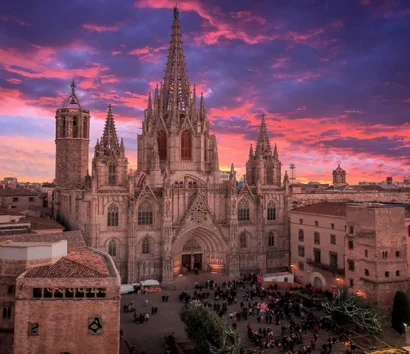
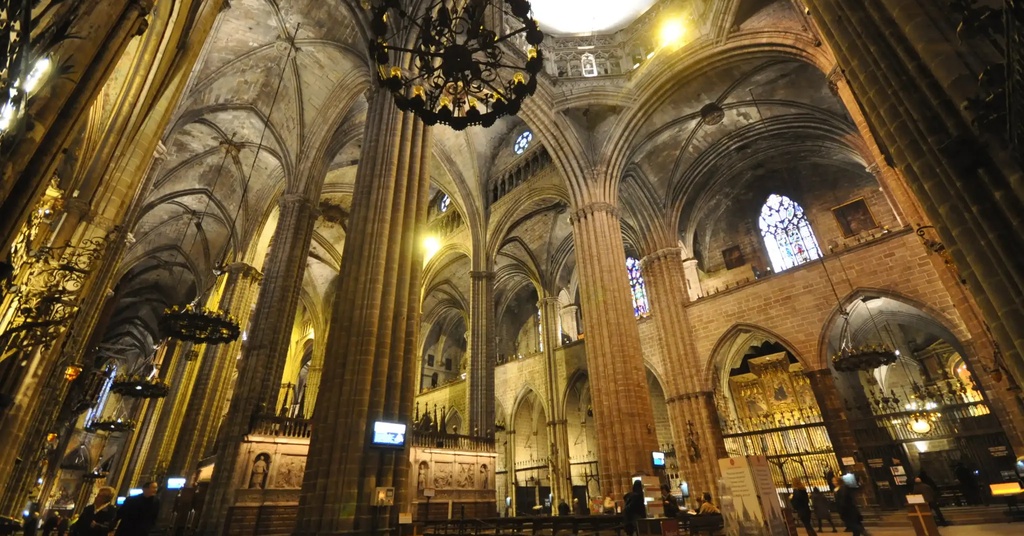
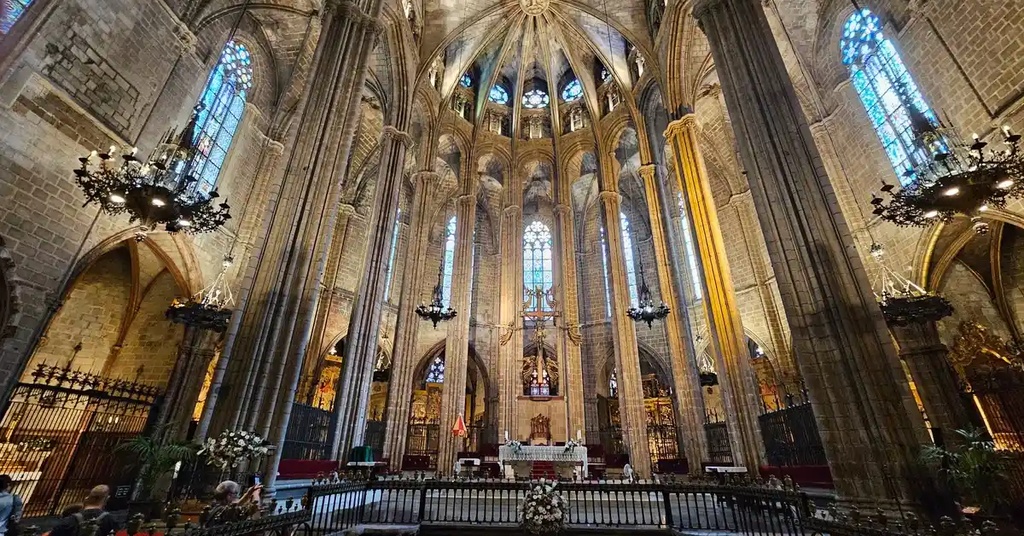
The Cathedral of Barcelona - formally the Cathedral of the Holy Cross and Saint Eulalia - is the spiritual and architectural anchor of the entire Gothic Quarter. Construction began in 1298 on the site of an earlier Romanesque church (itself built over a Roman basilica), and the main body of the building was largely complete by the early 15th century, though the iconic neo-Gothic façade facing Plaça de la Seu was actually added much later, in the late 19th and early 20th centuries, using a medieval design that had been left on paper for 500 years. That layered history - Roman foundations, medieval bones, a modern face - is part of what makes a visit here so fascinating, and it's exactly the kind of detail the audio guide brings to life as you move through the building.
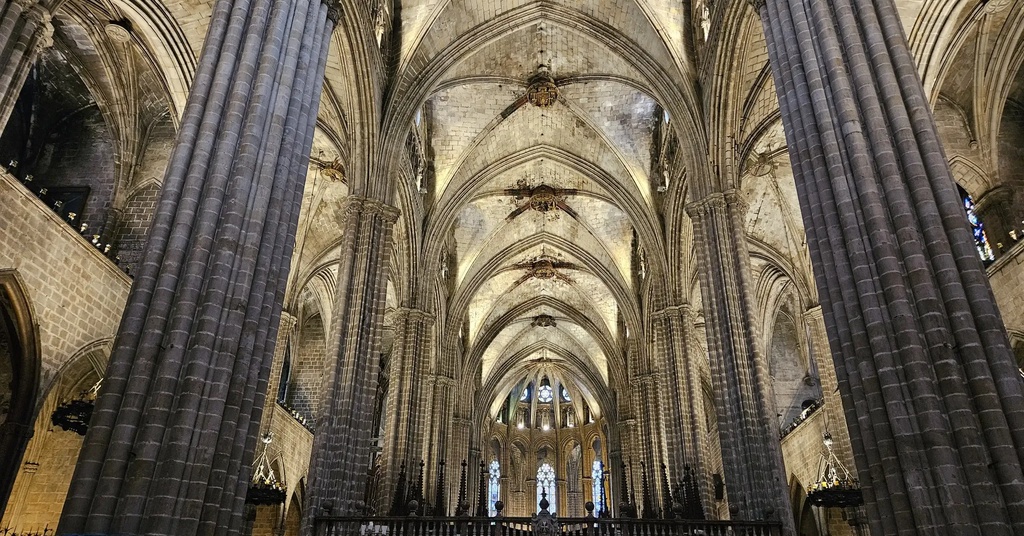
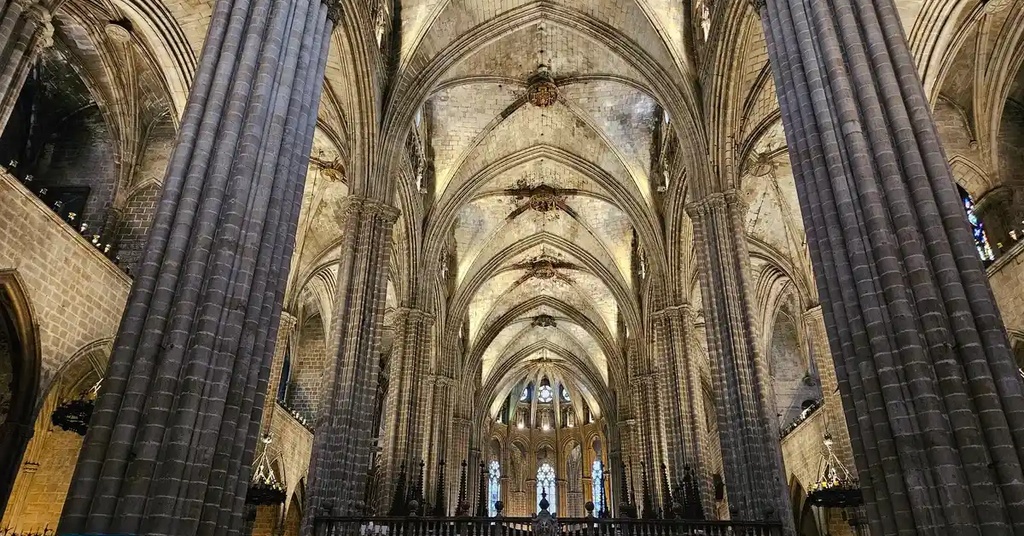
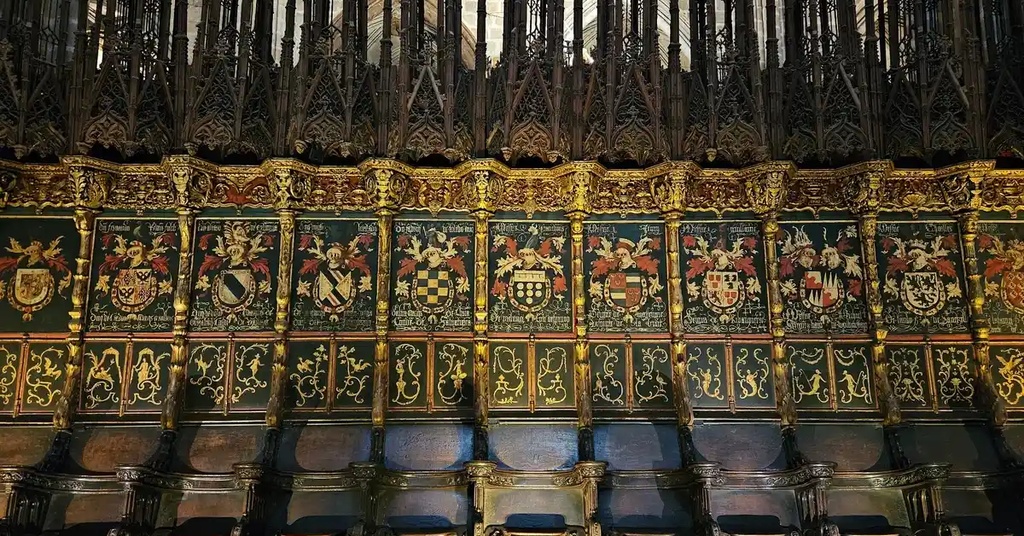
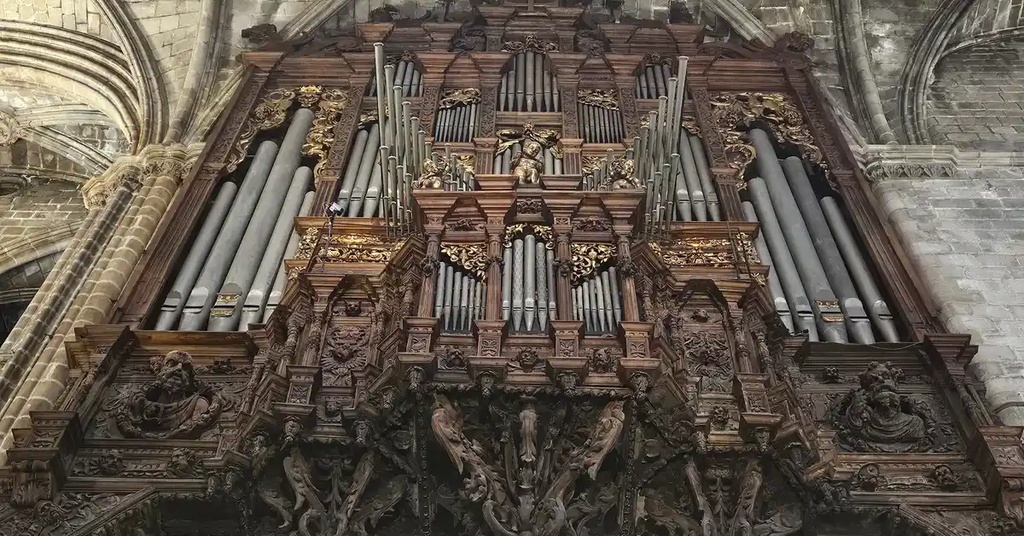
Inside, the cathedral's soaring nave and side chapels showcase the full range of Catalan Gothic craftsmanship: ribbed vaulting, intricate choir stalls, and chapels dedicated to a long list of saints and patrons of Barcelona's historic guilds, each with its own story about the tradesmen and families who funded it centuries ago. The audio guide walks you through the most significant chapels and architectural features so you understand not just what you're looking at, but why it was built that way.
The Crypt of Saint Eulalia
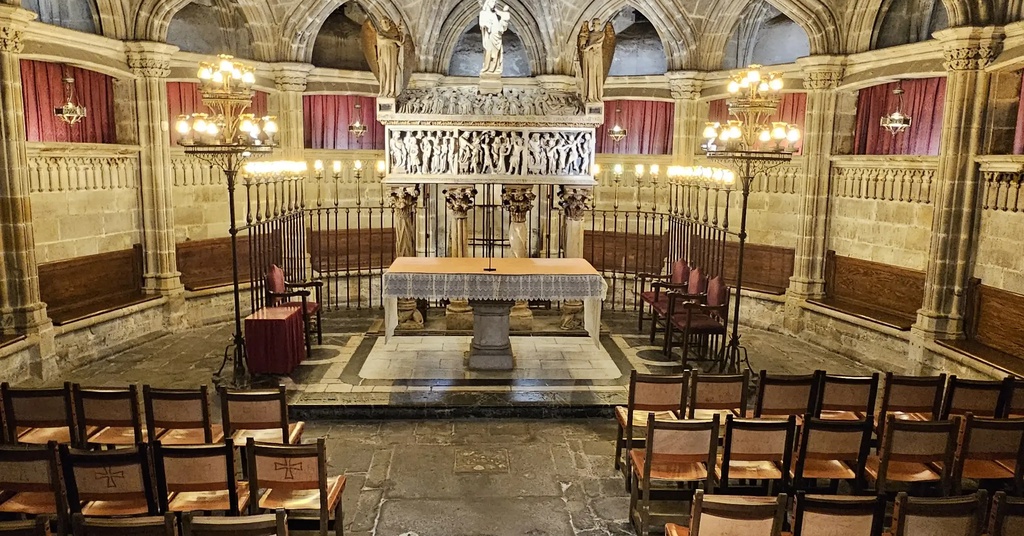
Beneath the main altar lies the crypt of Saint Eulalia, one of Barcelona's two patron saints, martyred in the 4th century. Her alabaster sarcophagus, carved in the 14th century, is one of the most visited and photographed features inside the cathedral, and the audio narration covers both the artistry of the tomb and the legend of Eulalia herself - a story that recurs throughout Barcelona's festivals and street names to this day.
The Cloister
Just off the main body of the cathedral, the cloister is one of the most atmospheric spaces in the entire Gothic Quarter. Palm trees rise above a quiet garden, magnolia and medlar trees line the walkways, and a small fountain sits at the center - watched over, famously, by a resident flock of thirteen white geese, said to represent the age of Saint Eulalia at the time of her martyrdom. It's a detail almost every visitor asks about, and one the audio guide explains in full. The surrounding gallery is lined with chapels and tombstones, offering a quieter, more contemplative contrast to the grandeur of the main cathedral interior.
The Rooftop Terrace
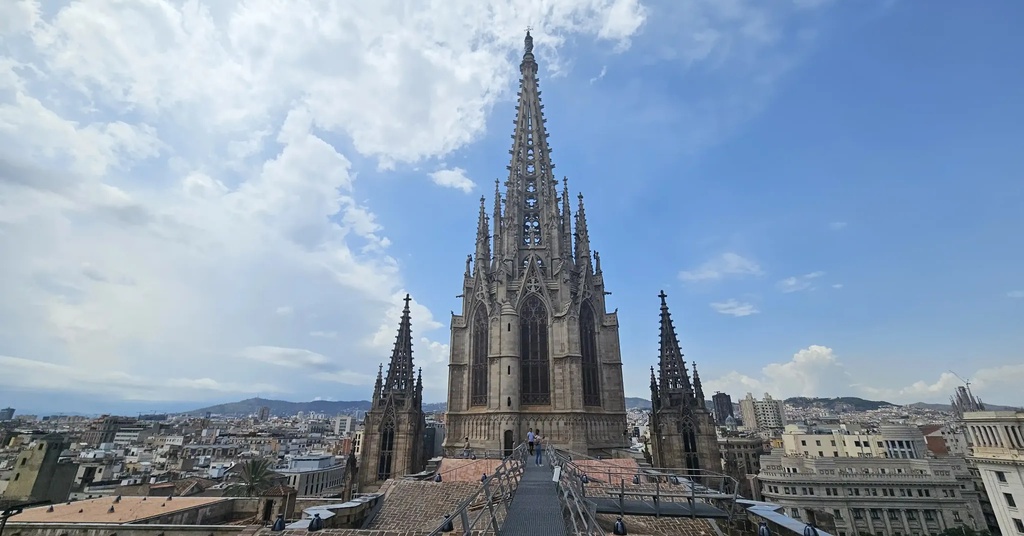
Where access is available, the rooftop terrace is one of the best-kept photo opportunities in the old town. From up among the spires and gargoyles, you get sweeping views across the terracotta rooftops of the Gothic Quarter, out toward the sea, and back toward the mountains that frame the city. It's a genuinely different perspective on Barcelona - most visitors experience the Gothic Quarter from street level, looking up; from the rooftop, you look down on the maze of medieval lanes you're about to explore on foot.
The Gothic Quarter Audio Walking Tour: Ten Landmarks, One Continuous Loop
This is the new addition that completes the Cathedral of Barcelona - Gothic Quarter experience. Rather than leaving you to wander without direction after your cathedral visit, this self-guided audio tour gives you a clear, looping route of roughly 2 kilometers - about 60 minutes of walking at a relaxed pace, longer if you stop to browse shops, take photos, or sit in one of the squares. The route is built around ten landmarks, each with its own audio narration accessible through an interactive map, so you always know exactly where you are and what you're looking at.
1. Plaça Nova & the Roman Walls
The tour begins at Plaça Nova, right outside the cathedral, where two round Roman towers still stand - surviving fragments of the 4th-century walls that once encircled Barcino, the Roman settlement that eventually grew into Barcelona. Standing here, with the neo-Gothic cathedral façade on one side and Roman stonework on the other, is the perfect visual summary of what the entire Gothic Quarter is about: centuries of history layered on top of each other in a single city block.
2. Barcelona Cathedral
The second stop is the cathedral itself, described in the walking tour as a 13th–15th century Gothic masterpiece. Even if you've already toured the interior on your cathedral ticket, this stop adds valuable outdoor context - the history of the façade, the significance of the square in front of it, and how the building fits into the broader story of medieval Barcelona.
3. Pont del Bisbe (Bishop's Bridge)
A short walk away is one of the most photographed spots in the entire city: the neo-Gothic bridge connecting the Generalitat de Catalunya building to the Casa dels Canonges. Despite its medieval appearance, the bridge was actually built in the 1920s - a detail that surprises most visitors and sparks genuine curiosity about how much of the "medieval" Gothic Quarter is original versus carefully reconstructed. Look for the skull-and-dagger carving beneath the bridge, a small but famous detail with its own local legend.
4. Plaça de Sant Felip Neri
Tucked away from the main tourist flow, this small, quiet square is one of the most emotionally resonant stops on the route. The pockmarked walls of the church here still bear the scars of a bombing during the Spanish Civil War, and the square's fountain and surrounding buildings make it one of the most atmospheric corners of the old town - a favorite for photographers and for anyone wanting a moment of stillness away from the crowds.
5. Plaça de Sant Jaume
This is the political heart of Barcelona, and has been for two thousand years - it sits directly over the site of the Roman forum. Today it's flanked by two of Catalonia's most important buildings: the Palau de la Generalitat (the seat of the Catalan government) and Barcelona's City Hall. The audio guide explains how this single square has continuously served as the city's administrative and civic center since antiquity, a remarkable continuity that few other European cities can claim.
6. Temple of Augustus
Hidden inside a courtyard just off Carrer del Paradís, and easy to miss without knowing exactly where to look, stand four columns from a Roman temple dedicated to Emperor Augustus, dating to the 1st century BC. This is one of the most surprising stops on the tour precisely because of how unassuming its entrance is - a genuine "hidden gem" moment that most casual visitors to the Gothic Quarter walk right past.
7. Plaça del Rei
This medieval square was once the ceremonial center of the Counts of Barcelona and the Kings of Aragon. According to local tradition, this is where Ferdinand and Isabella received Christopher Columbus upon his return from the Americas in 1493. The Gothic architecture surrounding the square, including the Palau Reial Major and the Chapel of Saint Agatha, makes this one of the most visually striking stops on the entire route.
8. El Call (the Jewish Quarter)
The tour then winds through El Call, the historic Jewish quarter of medieval Barcelona, one of the most important in medieval Catalonia until the expulsion and violent pogrom of 1391. The narrow streets here still preserve their medieval scale, and a handful of markers and remnants - including a preserved synagogue nearby - tell the story of a community that shaped the intellectual and commercial life of the city for centuries before its tragic end. This stop adds crucial historical depth to the Gothic Quarter walking experience.
9. Plaça del Pi & Santa Maria del Pi
A lively square built around the Church of Santa Maria del Pi, known for its enormous rose window - among the largest of its kind in the world. The surrounding streets are full of small artisan shops, and the square itself is a popular spot for street performers and weekend art markets, giving visitors a taste of the Gothic Quarter as a living, breathing neighborhood rather than a static museum piece.
10. Plaça Reial
The route closes at Plaça Reial, a grand 19th-century neoclassical square just off La Rambla, lined with palm trees, cafés, and wrought-iron lamp posts famously designed by a young Antoni Gaudí - one of his earliest public commissions in the city. It's a fitting, lively endpoint to the walk: after an hour spent among Roman ruins and medieval alleys, Plaça Reial offers the perfect spot to sit down, order a drink, and reflect on everything you've just seen.
How the Combined Cathedral of Barcelona - Gothic Quarter Experience Works
Both parts of this experience are fully self-guided and delivered digitally, so there's no need to coordinate schedules with a live guide or a group. Here's how it comes together in practice:
- Book online and choose your preferred cathedral entry time slot.
- Receive your tickets by email and WhatsApp approximately 24 hours before your visit, including your cathedral entry pass and access instructions for the Gothic Quarter audio map.
- Visit the cathedral first, using your digital audio guide to explore the interior, cloister, crypt, and rooftop at your own pace over roughly 1.5-2 hours.
- Step outside and start the Gothic Quarter walking tour whenever you're ready - immediately afterward, later the same day, or even on a different day during your stay, since the audio map remains accessible on your device.
- Follow the interactive map through all ten stops, listening to the corresponding narration at each landmark, with built-in Google Maps directions so you never lose the route even in the neighborhood's maze-like streets.
Because both experiences are app- and browser-based rather than tied to a fixed departure time, you have complete freedom to structure your day around them - start early to beat the crowds inside the cathedral, then walk the Gothic Quarter loop in the cooler part of the late afternoon, or do it all in one continuous morning outing.
Duration and Pacing
Plan for roughly 1.5 to 2 hours inside the cathedral itself, depending on how much time you spend in the cloister and on the rooftop terrace. The Gothic Quarter walking tour adds approximately 60 minutes of walking, covering around 2 kilometers, though most visitors comfortably stretch this to 90 minutes or more once you factor in photo stops, browsing the shops around Plaça del Pi, or pausing for a coffee at Plaça Reial. In total, budget half a day for the complete Cathedral of Barcelona - Gothic Quarter experience if you want to enjoy it without feeling rushed.
Languages Available
Cathedral audio guide: English, French, German, Catalan, Spanish, Italian, Chinese, Korean (8 languages)
Gothic Quarter walking tour: English, German, Spanish, French, Italian (5 languages)
This wide language coverage makes the combined experience accessible to the vast majority of international visitors to Barcelona, with both guides designed for clear, easy-to-follow narration suitable for solo travelers, couples, and families alike.
Meeting Point and Getting There
The cathedral portion begins at the Cathedral of Barcelona's main entrance, Plaça de la Seu, in the heart of the Gothic Quarter - easily reached on foot from La Rambla, Plaça de Catalunya, or Via Laietana, and well served by nearby metro stops (Jaume I on the L4 line is one of the closest). There is no fixed meeting point or check-in desk to search for beyond the main entrance itself; simply arrive within your selected time window with your mobile ticket ready.
The Gothic Quarter walking tour naturally begins at the same location - Plaça Nova, just outside the cathedral's main façade - making it seamless to transition from one experience directly into the other without backtracking across the city.
Best Time to Visit
Mornings tend to be the quietest time to explore the cathedral interior, particularly right after opening, before tour groups arrive in force. The Gothic Quarter walking route, by contrast, often feels most atmospheric in the late afternoon or early evening, when the narrow streets are bathed in warm light and the squares fill with locals rather than daytime tourist traffic. Splitting the two experiences across the day - cathedral in the morning, walking tour in the late afternoon - is a popular way to get the best of both.
What to Bring and Dress Code
Because the Cathedral of Barcelona is an active place of worship, modest dress is recommended: shoulders and knees should generally be covered for entry. Comfortable walking shoes are essential for the Gothic Quarter route, since much of it covers uneven medieval cobblestones. Bring your own headphones or earphones for both audio guides, as they are not provided on-site. A fully charged phone (or a portable charger) is also worth having, since both the cathedral audio guide and the Gothic Quarter map are accessed digitally.
Cancellation and Rescheduling Policy
This experience offers free cancellation up to 24 hours before your scheduled cathedral entry time, along with the flexibility to reschedule your visit at no extra cost, subject to availability. Because the Gothic Quarter walking tour is not tied to a fixed time slot, it can be completed at your convenience any time your digital access remains valid, giving you added flexibility if weather or travel plans shift during your stay.
Accessibility and Support
Round-the-clock customer support is available by phone and WhatsApp, so help is always within reach if you have questions about your booking, need to adjust your entry time, or run into any issue accessing your digital tickets or the Gothic Quarter map on the day of your visit.
Why Choose the Cathedral of Barcelona - Gothic Quarter Experience
There are plenty of ways to see the Cathedral of Barcelona on its own, and plenty of free walking routes through the Gothic Quarter available online. What sets this combined ticket apart is the way it ties both experiences into a single, coherent narrative - one that starts with the Roman foundations of the city, moves through the medieval cathedral built on top of them, and then sends you out into the surrounding streets to see exactly how that history radiates outward into squares, bridges, hidden ruins, and living neighborhoods. Instead of two separate, disconnected activities, you get one continuous story of Barcelona's oldest quarter, told at your own pace, in your own language, on your own schedule.
For travelers who want depth without the constraints of a fixed-time group tour, and for anyone who wants to understand not just what they're looking at but why it matters, the Cathedral of Barcelona - Gothic Quarter combination is one of the most complete self-guided ways to experience this part of the city.