Paris is famous for its cuisine, but to truly understand French gastronomy, you must go beyond restaurants and cafés. Instead, you should explore the city’s vibrant food markets. These markets are where locals shop, chefs find inspiration, and traditions come alive every single day.
From historic covered halls to lively open-air streets, Parisian food markets offer an authentic glimpse into daily life. Moreover, they showcase the diversity, quality, and passion that define French food culture. For travelers, visiting a food market is not just shopping-it is a cultural experience.
Why Paris Food Markets Are So Special
First of all, Parisian markets focus on quality. Farmers, cheesemakers, bakers, and fishmongers proudly present their products, often sourced from nearby regions. As a result, visitors discover flavors that reflect France’s rich agricultural heritage.
In addition, markets create a sense of community. Locals greet vendors by name, exchange recipes, and discuss seasonal produce. Therefore, walking through a market feels personal, lively, and deeply Parisian.
Most importantly, these markets allow travelers to taste Paris with all their senses.
Marché des Enfants Rouges – The Oldest Market in Paris
Founded in 1615, Marché des Enfants Rouges is the oldest covered market in Paris. Located in the Marais district, it blends history with modern food culture.
Here, visitors find:
- fresh produce and artisanal ingredients
- traditional French dishes
- international street food stalls
Because of its relaxed atmosphere, this market is perfect for lunch. Moreover, it attracts both locals and food-loving travelers seeking authentic flavors.
Marché des Enfants Rouges – A Historic Food Market in the Heart of Paris
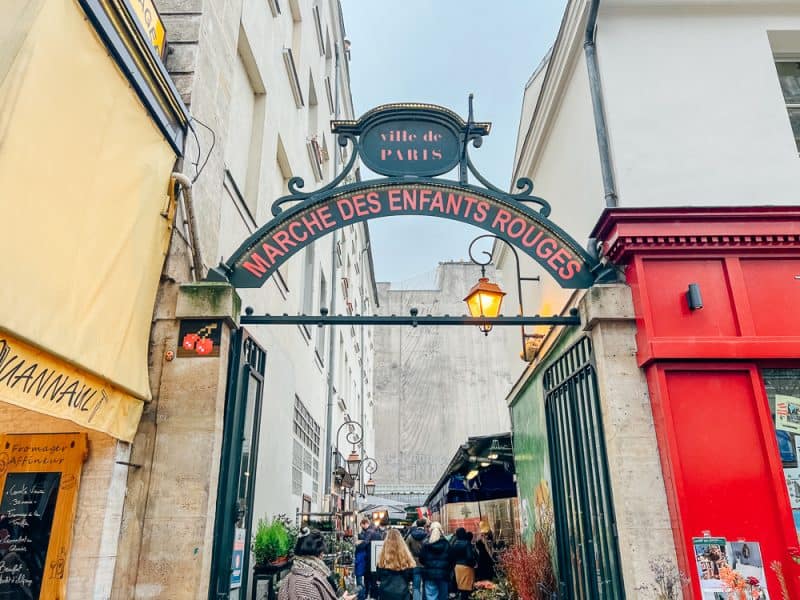
Tucked away among the elegant boutiques and art galleries of the Marais, Marché des Enfants Rouges is one of Paris’s most delightful hidden treasures. At first glance, it blends seamlessly into its surroundings. However, once you step inside, you discover a place rich in history, flavor, and local life.
Paris’s Oldest Covered Market
Founded in 1615, Marché des Enfants Rouges holds the title of the oldest covered market in Paris. Over the centuries, it has evolved while preserving its original spirit.
The name, which translates to “Market of the Red Children,” comes from a nearby orphanage where children once wore red clothing. As a result, the market carries not only culinary heritage but also a deeply human story.
Even today, the market feels timeless. It has aged gracefully, much like the fine French wines Parisians cherish.
A Global Feast Under One Roof
If you imagine a quiet, traditional market, think again. Instead, Marché des Enfants Rouges offers a vibrant mix of cultures and cuisines. In fact, it feels like a miniature world tour through food.
Visitors can enjoy:
- fragrant Moroccan couscous
- flavorful Japanese bento boxes
- hearty Italian specialties
- classic French dishes, including crêpes filled with ham and melted cheese
Because of this diversity, the market attracts locals, chefs, and travelers alike. Consequently, it ranks among the best places in Paris for international street food.
Why This Market Is a Must-Visit
Beyond the food, Marché des Enfants Rouges offers atmosphere. Conversations flow easily. Aromas fill the air. Moreover, the setting feels authentic rather than staged for tourists.
Whether you stop for lunch or simply wander through, the experience feels personal and lively. Therefore, this market is perfect for travelers who want to taste Paris beyond restaurants and guidebooks.
Final Thoughts – Where History Meets Flavor
Marché des Enfants Rouges is more than a market. It is a living piece of Parisian history. From its centuries-old origins to its modern, multicultural food stalls, it reflects the city’s ability to honor tradition while embracing the world.
If you want to experience Paris like a local, this historic market is an unforgettable place to start.
Marché Bastille – A Classic Open-Air Experience
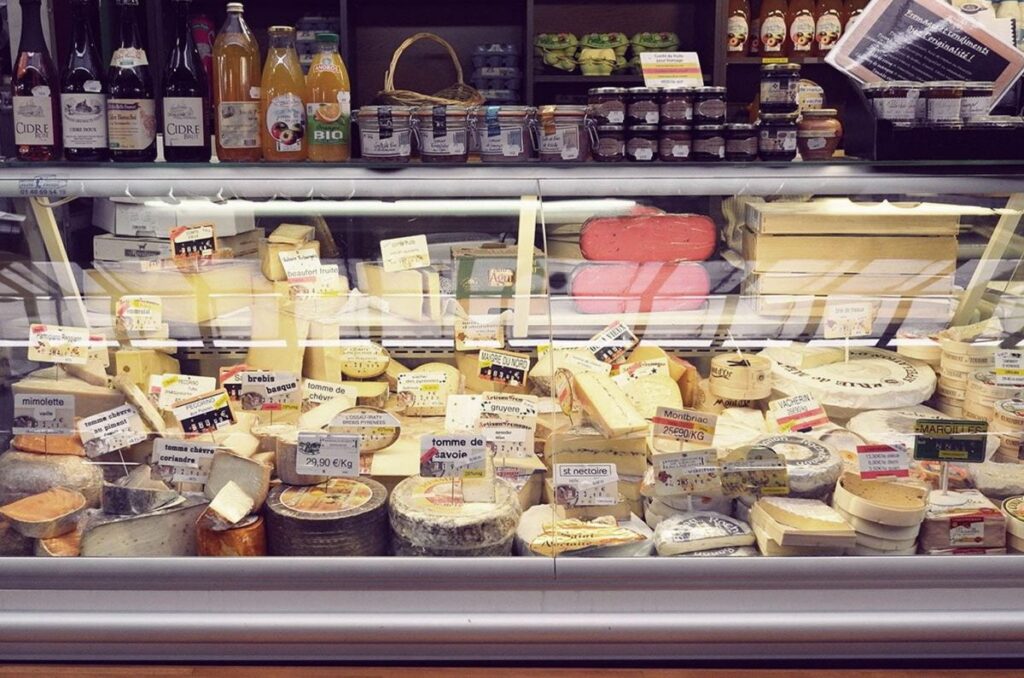
Stretching along Boulevard Richard-Lenoir, Marché Bastille is one of the largest and most popular open-air markets in Paris.
It offers:
- colorful fruit and vegetable stands
- fresh seafood and meats
- cheeses from across France
- baked goods and regional specialties
As you stroll through the stalls, you experience the rhythm of Parisian life. Therefore, this market is ideal for first-time visitors who want a lively and traditional atmosphere.
Marché Bastille
Marché Bastille is one of Paris’s largest and most vibrant open-air markets, located along Boulevard Richard-Lenoir near Place de la Bastille. Known for its lively atmosphere and wide variety of goods, it attracts both Parisians and visitors seeking fresh produce, artisan foods, and crafts.
Key facts:
- Location: Boulevard Richard-Lenoir, 11th arrondissement, Paris
- Market days: Thursdays and Sundays
- Type: Open-air street market
- Notable for: Fresh produce, specialty foods, flowers, and handmade items
- Nearest metro: Bastille Metro Station
History and setting
Established in the 1980s, Marché Bastille extends beneath rows of plane trees between Place de la Bastille and Rue Chemin Vert. Its setting on the historic boulevard—once part of Canal Saint-Martin—offers an open, tree-lined promenade ideal for market stalls. The area’s proximity to central Paris landmarks and its association with the revolutionary heritage of Place de la Bastille enhance its appeal.
Offerings and atmosphere
The market features around 200 vendors on busy days, offering seasonal fruits and vegetables, regional cheeses, cured meats, breads, seafood, and flowers. Several stalls specialize in organic products and prepared foods. On certain dates, a crafts market replaces the food stalls, showcasing jewelry, ceramics, and artwork from local artisans. The market’s mix of scents, colors, and sounds exemplifies the traditional Parisian market experience.
Cultural role
Marché Bastille serves as both a neighborhood market and a cultural touchpoint for visitors seeking an authentic slice of Parisian daily life. Its accessibility and scale make it a key example of the city’s enduring open-air market culture, alongside Marché d’Aligre and Marché des Enfants Rouges. The market continues to be managed by the city of Paris, maintaining regulated standards for hygiene and quality while preserving its local character.
Marché d’Aligre – Where Locals Shop
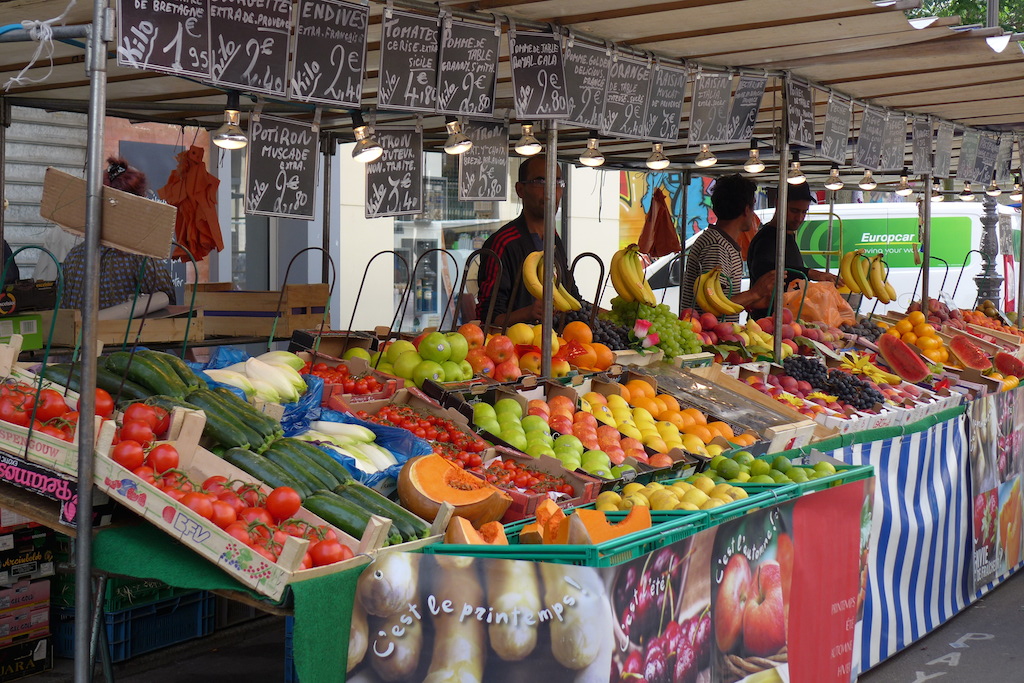
Marché d’Aligre combines an outdoor market with a covered section, making it one of the most authentic markets in the city.
What makes it special:
- excellent prices
- a strong local feel
- wine shops and cafés nearby
Because it attracts fewer tourists, this market feels raw and genuine. Consequently, it’s perfect for travelers who want to see the everyday side of Paris.
Marché d’Aligre
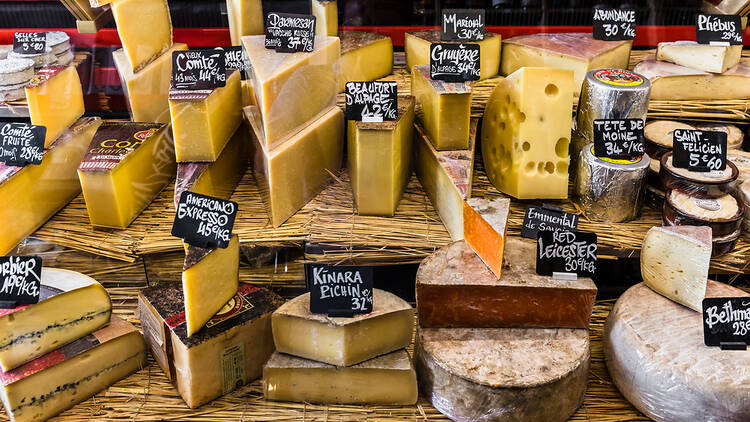
Marché d’Aligre is a lively neighborhood food and flea market located in the 12th arrondissement of Paris, France. Known for its vibrant atmosphere and mix of traditional French produce with global influences, it is a favorite among locals and visitors seeking an authentic Parisian market experience.
Key facts:
- Location: Place d’Aligre, 12th arrondissement, Paris
- Market type: Open-air and covered food market with flea market section
- Operating days: Tuesday–Sunday (closed Monday)
- Established: 18th century origins; modern structure from the 19th century
Layout and Offerings
Marché d’Aligre is divided into two main sections. The covered Marché Beauvau offers traditional food stalls selling fresh produce, cheese, meats, and specialty goods. The adjacent open-air area features fruit and vegetable vendors as well as a bustling flea market, where antiques and secondhand items are sold. Surrounding cafés and wine bars enhance the convivial neighborhood ambiance.
History and Character
The market’s roots trace back to the late 18th century, with the covered hall—Marché Beauvau—built in the mid-19th century during Paris’s modernization under Baron Haussmann. Despite urban changes, the market retains its popular, community-driven spirit. Its mix of permanent traders, street vendors, and bargain hunters creates a dynamic contrast between old Parisian commerce and contemporary multicultural life.
Cultural Significance
Marché d’Aligre exemplifies the daily rhythm of Parisian life and stands as a counterpoint to more tourist-oriented markets like Marché des Enfants Rouges. It is celebrated by chefs and locals for quality ingredients and social vibrancy, reflecting the diverse culinary landscape of modern Paris. The market’s informal flea section adds to its bohemian charm, making it a unique urban gathering spot.
Marché Saint-Quentin – A Hidden Gem Near Gare de l’Est
Marché Saint-Quentin is a beautiful covered market filled with light and charm. Inside, visitors discover:
- butcher shops and fishmongers
- cheese specialists
- prepared foods and wine bars
Since it’s less crowded, the atmosphere remains calm and welcoming. Therefore, it’s an excellent stop for travelers who prefer a relaxed market visit.
Marché Saint-Quentin
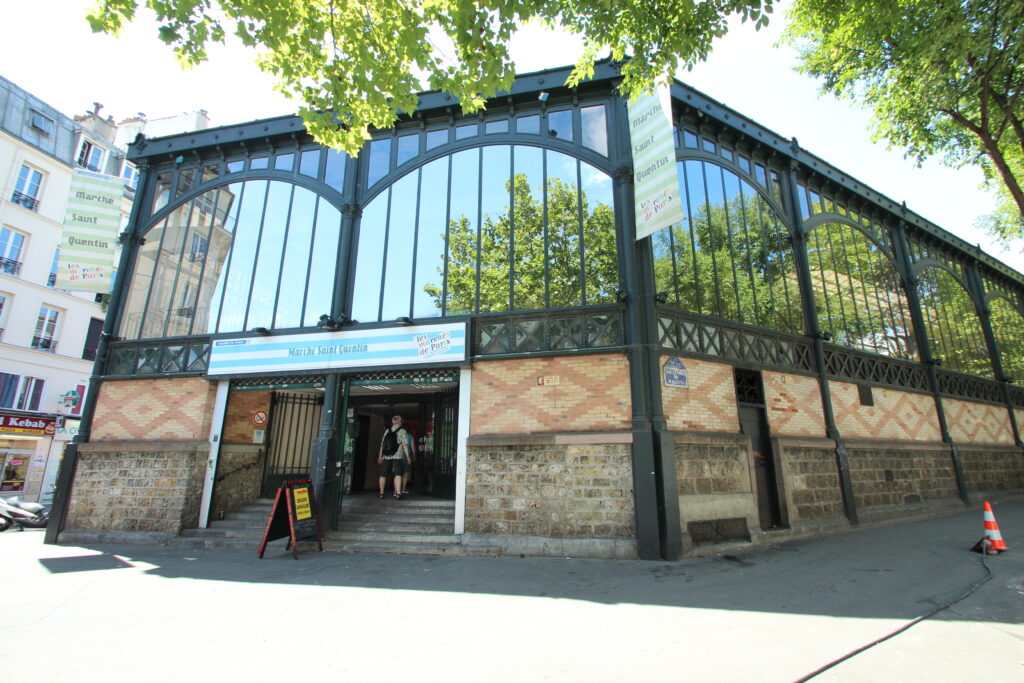
Marché Saint-Quentin is a 19th-century covered food market in the 10ᵉ arrondissement of Paris, located on Boulevard de Magenta between Gare du Nord and Gare de l’Est. It is one of the city’s oldest covered markets and a local landmark for everyday food shopping and casual eating.
Key facts:
- Type: Covered neighborhood food market
- Address: 85 bis Boulevard de Magenta, 75010 Paris
- Era & style: Mid-19th century, iron-and-glass “Baltard” style hall
- Main offer: Fresh produce, butchers, fishmongers, cheese, prepared foods, small eateries
- Typical hours: Generally Tuesday–Saturday full day, Sunday morning (check locally for updates)
Architecture and atmosphere
The building is characteristic of Paris’s historic iron-and-glass market halls inspired by architect Louis Baltard: high cast-iron arches, large glass panels, and plenty of natural light and ventilation. Inside, broad aisles run between permanent stalls, giving it a bright, airy feel compared with more cramped street markets while still remaining lively and a bit noisy at busy times.
Food and shopping
Stalls cover the full range of French daily shopping: fruit and vegetables, meat and poultry, fish and seafood, cheeses, charcuterie, bread and pastries, plus a couple of florists. There are also specialty counters and snack spots offering cuisines such as Italian, North and West African, Portuguese, Middle Eastern and Asian food, making it convenient both for grocery shopping and a quick, inexpensive meal.
Location and use
Because it sits between two of Paris’s busiest stations, the market is practical for travelers picking up picnic supplies before heading toward the Canal Saint-Martin or catching a train. It mostly serves local residents, so it feels more like an everyday neighborhood market than a tourist attraction, while still being easy for visitors to access.
Marché Biologique Raspail – Organic and Sustainable Paris
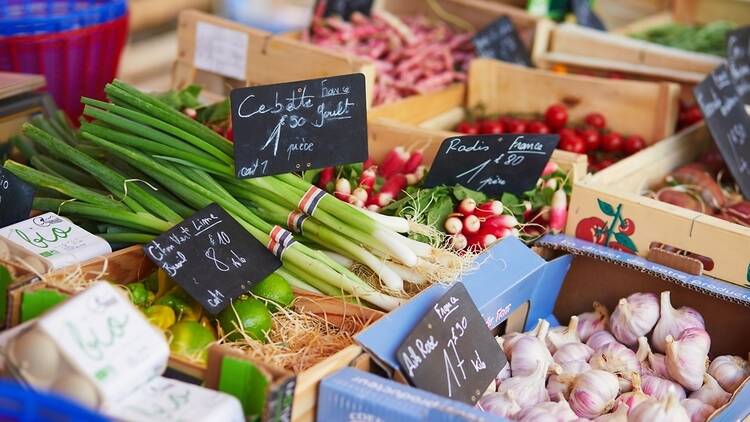
For eco-conscious travelers, Marché Biologique Raspail is a must-visit. This organic market focuses on sustainability, seasonal produce, and ethical farming.
Here, you’ll find:
- organic fruits and vegetables
- artisanal breads
- natural cheeses and wines
As a result, this market reflects modern Parisian values while preserving tradition.
Marché Biologique Raspail
Marché Biologique Raspail is a celebrated open-air organic market located on Boulevard Raspail in the 6th arrondissement of Paris, France. Renowned as one of the city’s most prestigious farmers’ markets, it features certified organic produce, artisanal goods, and gourmet specialties that attract both locals and visitors.
Key facts:
- Location: Boulevard Raspail, Paris 6th arrondissement
- Market days: Sunday (fully organic), Tuesday and Friday (non-organic versions)
- Type: Certified organic farmers’ market
- Founded: Late 1980s
- Notable for: Premium organic produce and Parisian gourmet atmosphere
History and Setting
Established in the late 20th century, Marché Biologique Raspail evolved from the traditional Raspail Market to become a pioneering space for certified organic trade in Paris. It is set along the tree-lined Boulevard Raspail between Rue du Cherche-Midi and Rue de Rennes, an area known for upscale shops and Left Bank charm.
Market Offerings
The Sunday market hosts around 50–60 vendors selling fruits, vegetables, cheeses, breads, wines, and cosmetics, all certified organic. Shoppers can find regional French specialties such as goat cheese from Provence, Normandy cider, and organic pastries. The market emphasizes traceability, freshness, and sustainability.
Cultural and Culinary Significance
Marché Biologique Raspail represents the intersection of French gastronomic culture and ecological consciousness. It attracts chefs, residents, and health-conscious consumers seeking authentic, high-quality ingredients. The atmosphere reflects Parisian lifestyle ideals-social, artisanal, and environmentally aware.
Visiting Experience
The market operates primarily on Sunday mornings, typically from 9 a.m. to 2 p.m. Early visits offer the best selection. Beyond shopping, visitors enjoy tasting samples, meeting producers, and experiencing a relaxed, convivial scene emblematic of Left Bank living.
What to Taste at Paris Food Markets
While exploring markets, be sure to try:
- fresh baguettes and pastries
- regional cheeses like Comté, Brie, and Roquefort
- charcuterie and cured meats
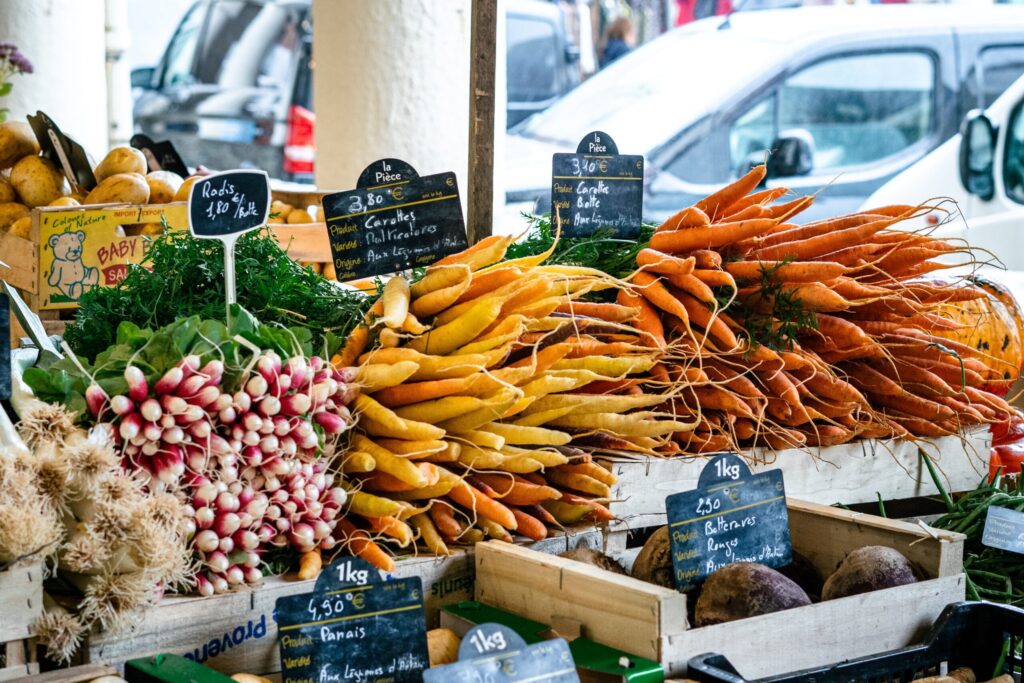
- seasonal fruits and vegetables
- oysters, depending on the season
Additionally, many markets offer ready-to-eat dishes, making them perfect for an impromptu picnic.
Food Markets as Part of a Paris Experience
Visiting a food market fits perfectly into a day of sightseeing. After exploring museums or historic neighborhoods, markets offer a chance to slow down and connect with local culture.
Moreover, food markets pair beautifully with:
- walking tours
- culinary experiences
- neighborhood explorations
They transform a trip into something personal and memorable.
Final Thoughts – Discover Paris Through Its Markets
Paris food markets reveal the soul of the city. They celebrate freshness, tradition, and human connection. Whether you visit a historic covered hall or a bustling street market, each experience adds depth to your journey.
In the end, to taste Paris is to understand it. And there is no better place to begin than at its markets.