

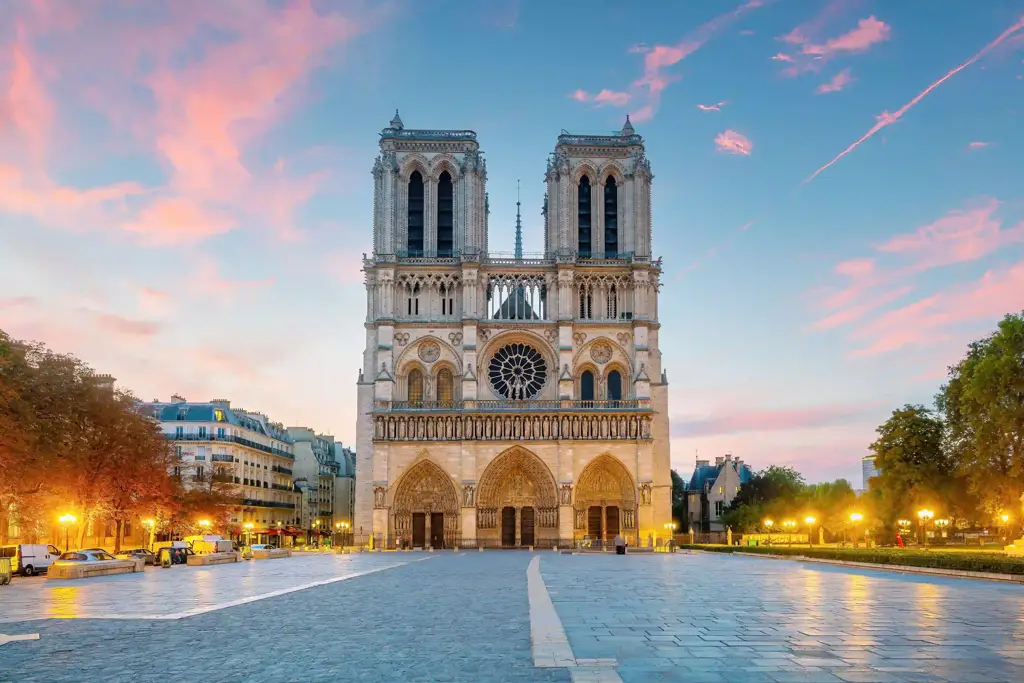
Notre-Dame is one of the most powerful symbols of Paris. Standing proudly on the Île de la Cité, in the historic heart of the French capital, this world-famous cathedral has witnessed more than 850 years of history. For many visitors, Notre-Dame is not only a religious monument. It is also a masterpiece of Gothic architecture, a national treasure, and one of the most emotional places to visit in Paris.
The story of Notre-Dame is a story of faith, art, survival and rebirth. From its medieval construction to the devastating fire of 2019 and the extraordinary renovation that followed, Notre-Dame continues to inspire millions of people from all around the world.
The Early History of Notre-Dame
The construction of Notre Dame began in 1163, during the reign of King Louis VII. The project was launched under Bishop Maurice de Sully, who wanted to build a grand cathedral worthy of the growing importance of Paris. The foundation stone was laid in the 12th century, and the cathedral was developed over many generations of architects, builders, stonecutters, sculptors and craftsmen.
Notre-Dame was mainly completed by the 14th century, after nearly two centuries of construction. This long building period explains why the cathedral includes several stages of Gothic architecture. Its pointed arches, ribbed vaults, flying buttresses, rose windows and sculpted façades made it one of the greatest achievements of medieval Europe.
The cathedral was dedicated to the Virgin Mary, which is why it is called “Notre-Dame,” meaning “Our Lady” in French. Over the centuries, it became a central place of worship, ceremony and public life in Paris. Kings, emperors, religious leaders and ordinary citizens all passed through its doors.
A Masterpiece of Gothic Architecture
Notre Dame is famous for its dramatic Gothic design. Its two towers, large rose windows, carved portals and flying buttresses create one of the most recognizable silhouettes in the world. The western façade is especially impressive, with its three decorated portals showing biblical scenes and saints.
Inside Notre-Dame, visitors can admire the height of the nave, the beauty of the stained glass, and the peaceful atmosphere of the cathedral. The great rose windows are among the most admired elements of the building. They fill the interior with colored light and remind visitors of the skill and imagination of medieval craftsmen.
The cathedral also became famous through literature. Victor Hugo’s novel The Hunchback of Notre-Dame, published in 1831, helped renew public interest in the monument. At that time, Notre-Dame was in poor condition, and Hugo’s work played an important role in inspiring a major 19th-century restoration.
Notre-Dame Through French History
Notre-Dame has always been closely connected to the history of France. It survived wars, revolutions, political changes and social transformations. During the French Revolution, the cathedral suffered damage and many religious sculptures were destroyed or removed. Later, it was restored and returned to its religious function.
One of the most famous historical events connected to Notre-Dame was the coronation of Napoleon Bonaparte as Emperor of the French in 1804. This ceremony showed the cathedral’s importance not only as a church, but also as a national stage for major moments in French history.
For centuries, Notre-Dame was also a place of music, prayer and gathering. Its bells marked important events in the life of Paris. Its location, beside the Seine River and close to many other historical monuments, made it one of the most visited places in the city.
The Fire of 2019
On 15 April 2019, the world watched in shock as a major fire broke out at Notre-Dame. The flames spread through the roof structure, and the cathedral’s famous spire collapsed. Much of the wooden roof was destroyed, and the building suffered serious damage.
The fire was a heartbreaking moment for Paris, France and people around the world. Crowds gathered along the Seine, many of them silent, crying or praying as the flames rose above the cathedral. For many, it felt as if a part of world heritage was disappearing before their eyes.
Fortunately, firefighters managed to save the main structure of Notre-Dame. Many important religious relics, artworks and treasures were also saved. The stone vaults helped protect parts of the interior, even though the damage was still enormous.
Donations from Around the World
After the fire, people from all over the world wanted to help. Donations came from individuals, companies, institutions and international supporters. This wave of generosity showed how deeply Notre-Dame belongs not only to Paris, but to the shared cultural memory of the world.
According to France’s Court of Accounts, donations for the restoration reached hundreds of millions of euros, with the total estimated at around €843 million by March 2024. These funds supported the emergency safety work, the reconstruction, and the restoration of the cathedral.
The donation campaign was extraordinary because it united people from many countries. Large companies and wealthy donors contributed significant sums, but many ordinary people also gave smaller amounts. Together, these donations helped make the rebirth of Notre-Dame possible.
The Renovation and Rebirth of Notre-Dame
The renovation of Notre-Dame was one of the most important restoration projects in modern European history. Architects, engineers, historians, carpenters, stonemasons, glass specialists, organ experts and many other professionals worked together to bring the cathedral back to life.
The restoration aimed to respect the historical character of Notre Dame while using modern knowledge to protect the building for future generations. The spire was rebuilt, the roof structure was reconstructed, the stonework was cleaned, and many artistic and religious elements were restored.
Notre-Dame reopened to the public in December 2024 after five years of work. The cathedral’s reopening was a deeply emotional moment, symbolizing resilience, hope and renewal.
Even after the reopening, some restoration and improvement works continue. The area around the cathedral, including the forecourt and access routes, is being redesigned to improve the visitor experience and highlight the beauty of the monument.
Visiting Notre-Dame Today
Today, Notre Dame is once again one of the most important places to visit in Paris. Entry to the cathedral is free, although visitors can register online for a smoother visit. The visit route has been redesigned to welcome guests more comfortably after the reopening.
A visit to Notre-Dame is also a perfect opportunity to explore the surrounding area. The Île de la Cité is home to other remarkable sites, including Sainte-Chapelle, the Conciergerie and the Archaeological Crypt. Visitors can also walk along the Seine, cross the Pont au Double, or continue toward the Latin Quarter.
For travelers who want to understand the deeper story of Paris, Notre-Dame is essential. It is not only a monument to photograph from the outside. It is a place where architecture, religion, history and emotion come together.
Why Notre-Dame Still Matters
Notre-Dame matters because it represents more than stone, glass and wood. It represents memory. It reminds us of medieval Paris, royal ceremonies, religious devotion, artistic genius and modern resilience. The 2019 fire showed how fragile even the greatest monuments can be. The renovation showed what people can achieve when they come together to protect cultural heritage.
For visitors to Paris, Notre-Dame offers a powerful experience. Whether you admire it from the riverbank, enter the restored cathedral, or join a historical walk around the Île de la Cité, Notre-Dame remains one of the most unforgettable landmarks in Europe.
Its story is not finished. After the fire, the donations, the renovation and the reopening, Notre-Dame has entered a new chapter. It stands again at the heart of Paris, welcoming visitors, worshippers and history lovers from all over the world.